Ixsight is looking for passionate individuals to join our team. Learn more



Ixsight is looking for passionate individuals to join our team. Learn more
We don't have enough alerts is not a major concern for any compliance officer of an Indian bank, NBFC, or payment provider, is it? But it's typically the other way round. Each time that you clear an alert, you need to have a documented reason; too many alerts, too many false matches, and an RBI inspection or FIU-IND are here.
Today, the actual job of AML software in India is that. It is not a THUMB RUN checkbox. It's the system for a small team to defend thousands of decisions months after they were made.
This guide will explain what AML screening software is, why it is important for businesses in India, the key features to consider, and a comparison of the top 10 AML Screening Software India solutions. While these platforms offer valuable capabilities, not every solution is suitable for every business. Each entry highlights who the software is best suited for and which businesses may find it less suitable.
AML screening software analyzes customers, beneficial owners, and counterparties, and in some cases transactions, against a list of financial crime risk customers and/or entities. Usually, these lists contain the following information:
The software alerts to a match if a match is found. A computer scientist who reviews it determines if it's a true match or a false positive and documents their reasoning. Some good systems also monitor new hires after they've been added to the system, so if a customer becomes a PEP, or falls on a sanctions list two years later, it is caught without a manual rescreen.
Separates two related terms. Screening questions: Who is this person/company? Transaction monitoring is asking the question, “What is this account doing?” There are a number of vendors that offer both, but they're of different controls. This article stresses screening and notes whether a vendor includes monitoring.
The anti-money laundering regime of the country is based on the Prevention of Money Laundering Act, 2002, and the rules framed thereunder. Reporting entities, such as banks, NBFCs, payment operators, broker-dealers, insurers, and some other companies, are required to verify their clients, maintain records, and report suspicious and cash transactions to FIU-IND. The Master Direction on KYC includes some additional requirements relating to customer due diligence, risk categorization, and continuous monitoring. The FATF recommendations have an impact on the assessment of all this worldwide.
Regulators won't require you to use a specific tool, but they will want to see you have procedures in place that ensure controls are effective. A spreadsheet and a manual Google search will not be a hindrance on a large scale.
Indian names can be a nightmare to screen. There is no limit to the number of different spellings that can be used for one person, such as “Mohammed,” “Mohd.,” “Muhammad,” or “Md.” Surnames may also vary among geographic areas, initials may be used instead of names, and transliteration from foreign alphabets further distorts names. A simple exact-match solution will either not accurately identify hits or overwhelmingly drown your team in noise. Fuzzy matching and phonetic logic can deal with this much better in the construction of software.
Digital lending, UPI fintech, and neo-banking have inculcated the mindset of fast approval in the minds of the customers. Manual review queues waste a day if screening takes place, and applicants leave and go elsewhere to apply to competitive positions. Automated screening with appropriate parameters allows for immediate passage for clean customers and only conveys the real risk to humans.
The consequences include penalties, business curbs, damage to a company's reputation, as well as the covert cost of losing access to banks or international payment systems. If a young fintech is involved in a funding round or licence application and the audit fails, it can stall the process or even derail the funding round.
The software that documents every search, match decision, and note made by every analyst makes an inspection a matter of routine. That's enough to warrant the investment for many teams.
When looking for vendor demos, you'll find yourself focusing on their dashboards. Instead, delve into the following.
1. Quality and coverage of the data. The screening process is as good as the lists it is based on. Inquire about the frequency of updates, ownership of its own data, how it includes Indian PEPs, adverse media lists, regional lists, and any other domestic lists like the Ministry of Home Affairs (MHA).
2. Matching intelligence. Search for fuzzy matching, transliteration, adjustable limits, and cases of name order, titles, and initials. During a trial, ask them to use their own models of real customer names, even challenging names.
3. False positive management. How large your review queue is depends on the rules you have set, like the secondary identifiers you have set (date of birth, nationality, ID numbers), the match scoring rules, and automatic closure rules for clear non-matches.
4. Ongoing monitoring. Customers change. Rescreening, whether continuous or periodic, and alerting to changes in the lists is a must, not an option.
5. Case management and audit trail. Assignees, escalation, evidence attachment, and immutable logs should be part of the workflow for analysts. These will be requested by regulators.
6. Integration and API quality. See if the tool integrates perfectly with your core banking system, loan origination system, or the KYC process. These weeks of engineering time can be saved with good documentation and a usable sandbox.
7. India-specific reporting support. Having the ability to support the FIU-IND format, support CKYC workflows, and meet local data residency expectations is a differentiator for domestic buyers.
8. Explainability. If a tool is making use of machine learning to rank and/or close alerts, then it is important that you can explain why. “Model decided” is NOT a satisfactory response to an auditor.
9. Model for deployment and pricing. Cloud, private cloud, and on-premises options are important, particularly for bankers. Learn about pricing per search, per customer, or flat licence, and what happens when you get to scale.
10. Support and implementation. A simple, easy-to-use tool that has responsive local support can be more useful than a sophisticated one for which no one at your site can be trained up.
We considered four factors: depth of screening information and matching, useful for Indian and emerging-market buyers, reduction of analyst workload, and whether it is realistic to implement for various company sizes. The following order is not a "best to worst" list, because it is whatever suits you and your level of risk.
| Software | Best for | Primary strength |
| IXSIGHT | Indian banks, NBFCs | Local name matching and domestic context |
| AML Watcher | Startups and mid-size firms | Accessible API-driven risk data |
| ComplyAdvantage | Fintechs going global | Proprietary risk database |
| Napier AI | Mid to large institutions | AI-assisted screening and monitoring |
| NICE Actimize | Large banks | Enterprise-grade breadth |
| Signzy | Indian fintechs, banks | KYC, AML and reporting in one stack |
| Facctum | Sanctions-heavy operations | List management and screening engine |
| LSEG World-Check | Banks needing premium data | Widely used risk intelligence |
| Sanction Scanner | SMEs, crypto and payments | Straightforward screening |
| Sumsub | Digital-first platforms | Identity checks plus AML |
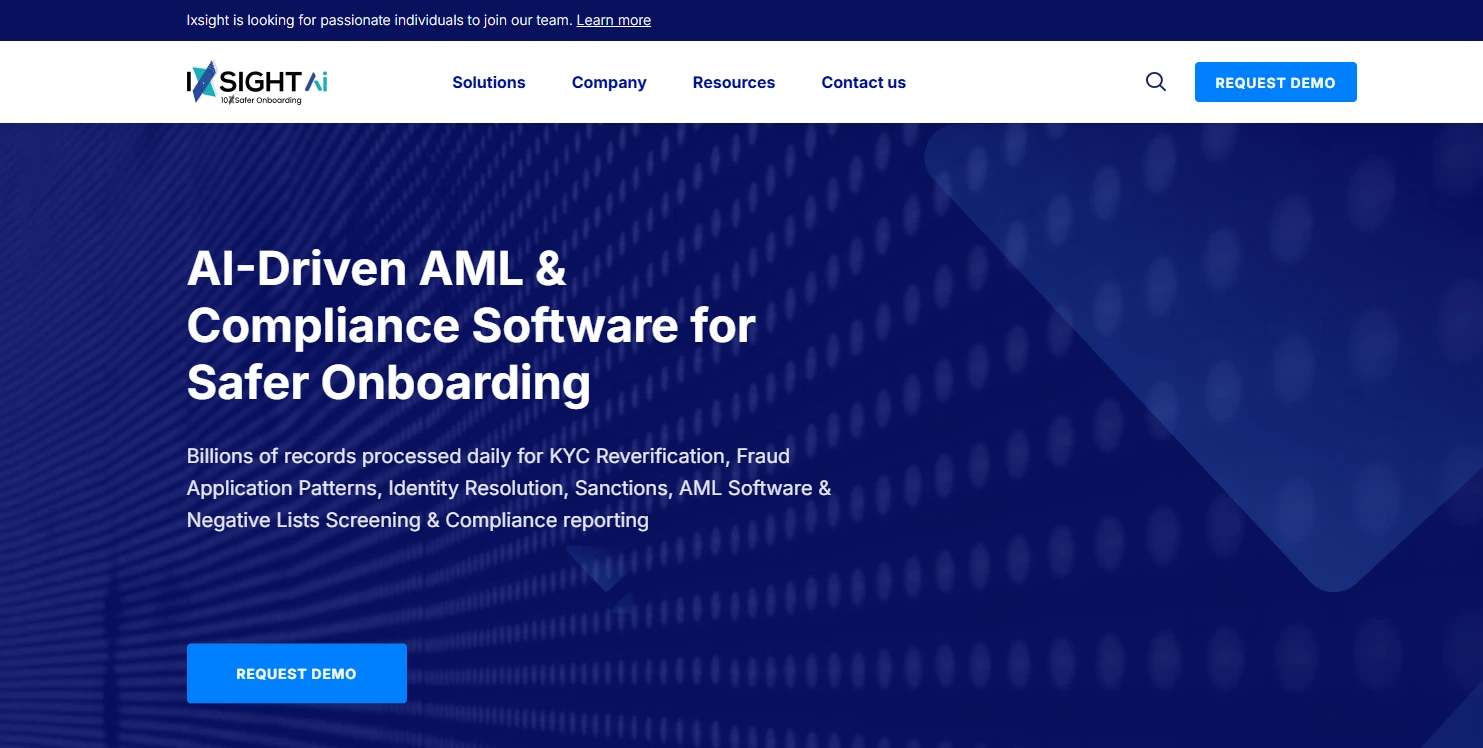
IXSIGHT has an Indian focus, reflected in the fact that it offers name matching for Indian naming conventions and that its screening workflows cater to domestic financial institutions. The key selling point for banks and NBFCs, who have been having trouble with transliteration, is this local understanding.
Ideal for Indian banks, NBFCs, and insurers who are looking for a vendor who is familiar with the regulations and names in India.
Beware: It may not be as well known as the Western vendors and may not have complete global list coverage, so determine how well the international list coverage matches your cross-border exposure.
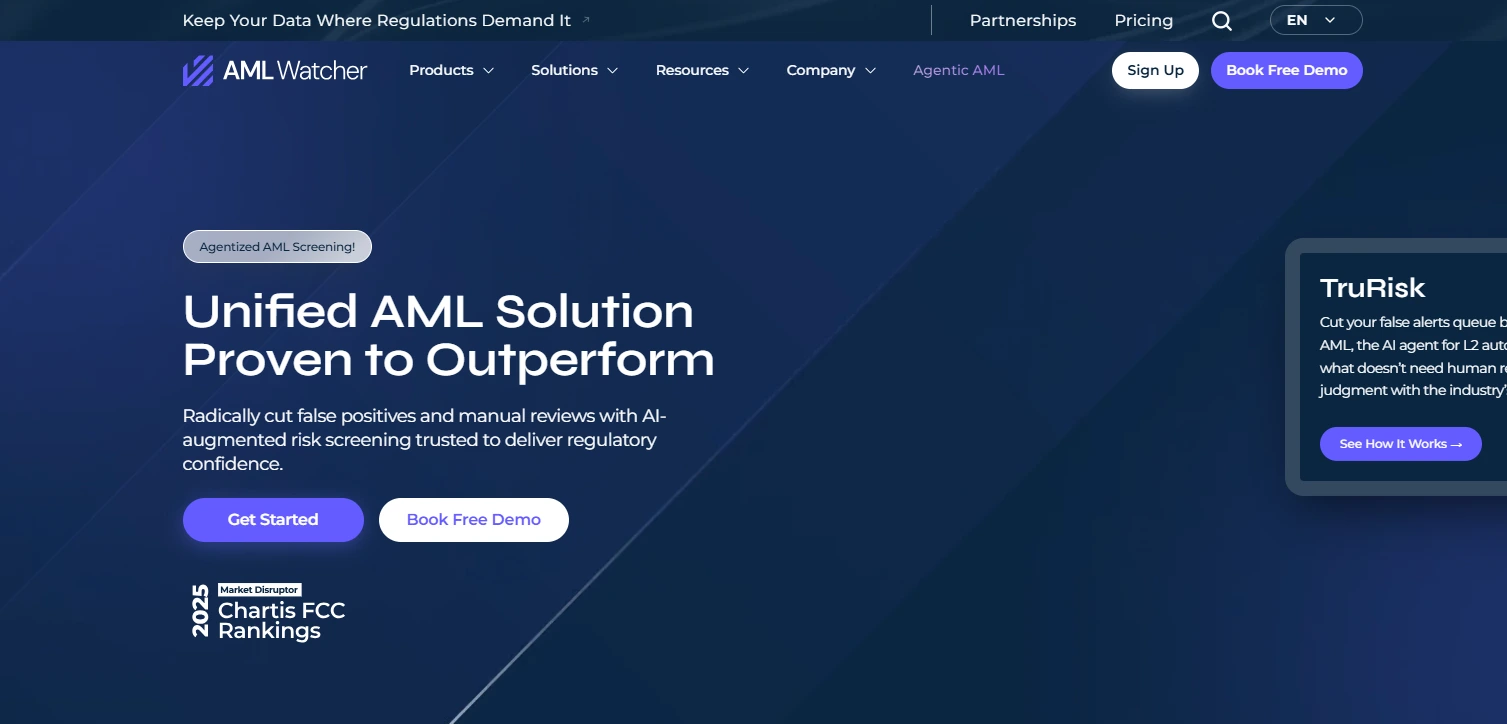
AML Watcher offers sanctions, PEP, and adverse media screening, typically via an API. It is more suited to teams that are looking for something that fits into their current onboarding process but isn't a comprehensive solution.
Ideal for: Startups and mid-size fintechs who require screening data, but don't need a large platform.
Be careful about this: If you require extensive case management, transaction monitoring, or reporting automation, you might want to add additional tools to it.
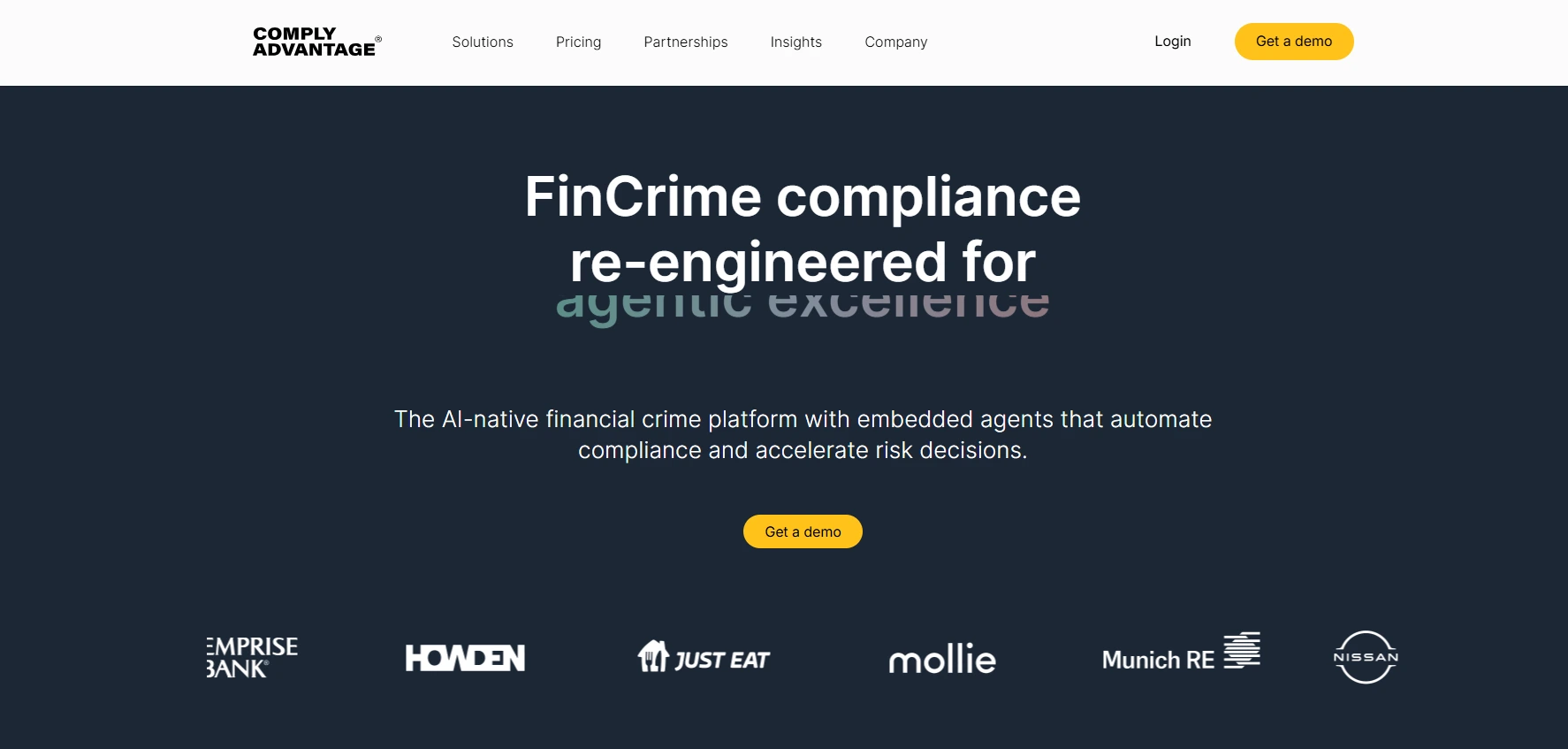
With its own updated risk database and user-friendly and developer-friendly tooling, ComplyAdvantage is a well-known name in the space. It encompasses sanctions, PEPs, adverse media, and transaction monitoring, and is well-liked by the fast-growing fintechs that are growing in the cross-border space.
Best for: Businesses with multiple country-level customers that appreciate having a robust data layer.
Be aware of: Volume discounts may apply, and Indian regulatory processes might require additional setup. Do not blindly sign up with a pilot unless they have Indian names.
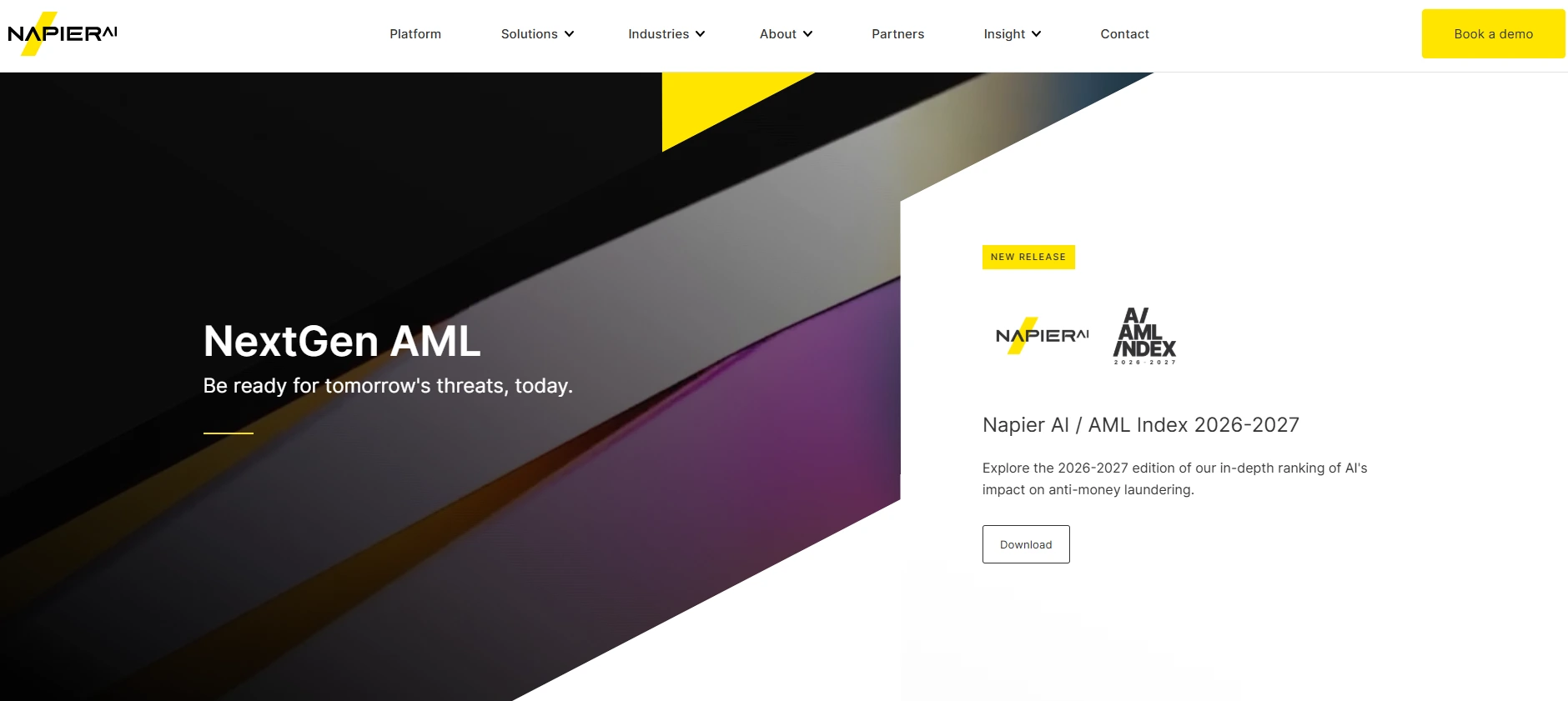
AML screening and transaction monitoring by Napier AI is designed to maximize alert quality and minimize alert noise using a focus on machine learning. It is being sold primarily to larger financial institutions and banks that are looking to screen and monitor in a connected platform.
Appropriate for: mid-size to large institutions with the budget necessary to support a more sophisticated system and to fine-tune it.
Be aware of: More advanced tools require greater setup. Make sure that their systems are explained; analysts and auditors should be able to see why the system reached a conclusion.
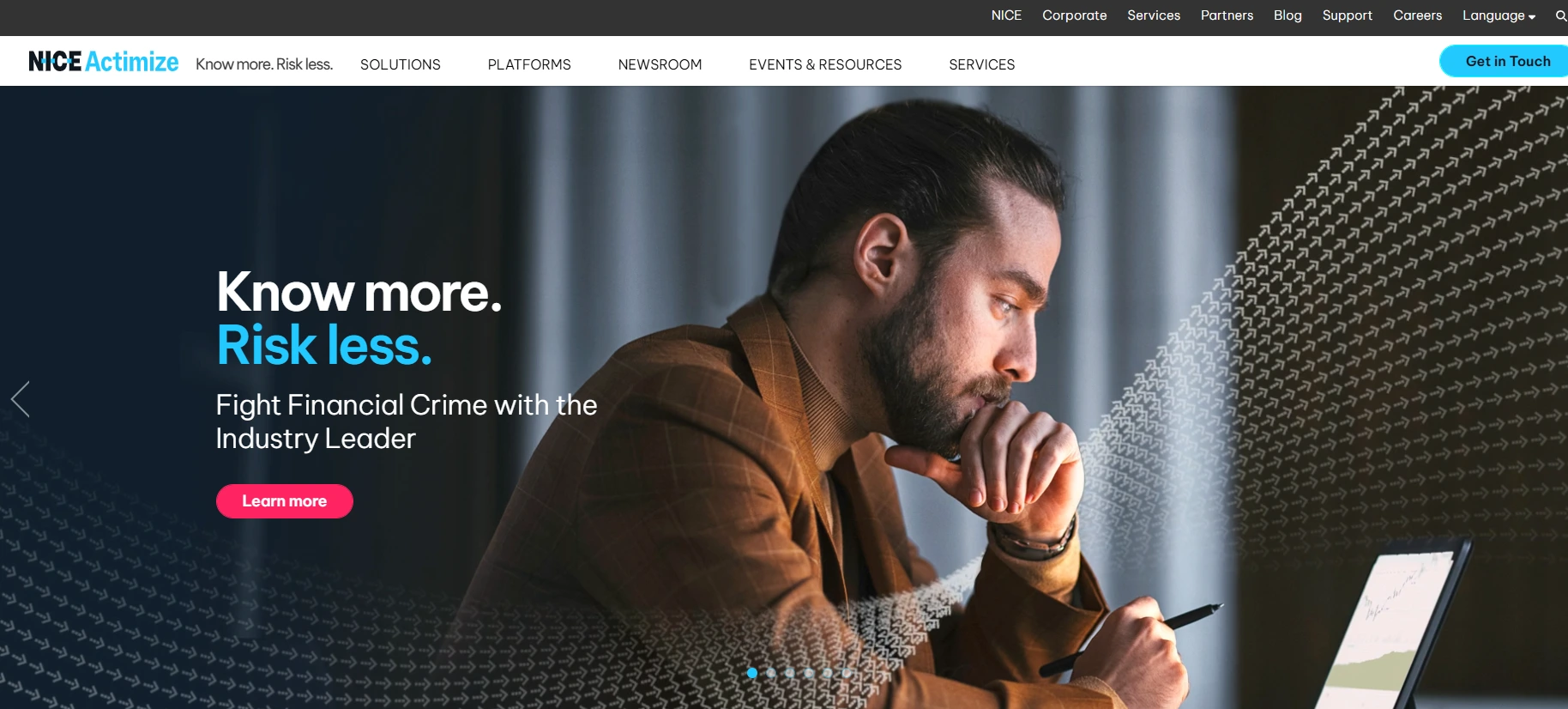
NICE Actimize is an enterprise name that has been around for years. It has an extensive suite that includes screening, monitoring, fraud, and case management, and is widely used in large global banks.
Best suited for: Large, complex banks in multiple jurisdictions with budget and staff to maintain an enterprise platform.
Be careful of: It may take a long time and cost a lot to implement. If you are an early-stage fintech or a small NBFC, it's most likely more than you need.
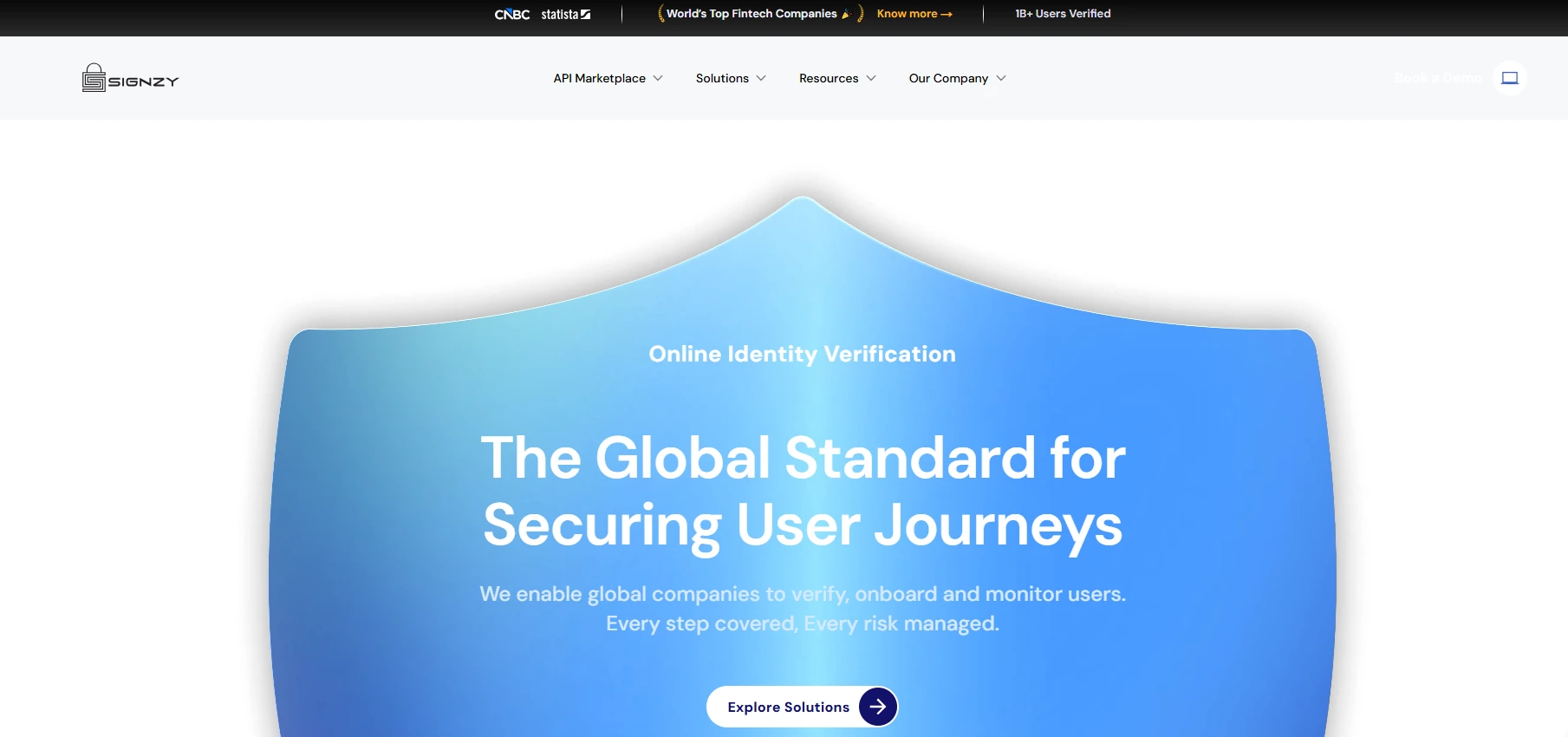
Signzy is an India-based platform that is an amalgamation of KYC, KYB, AML screening, transaction monitoring, and fraud tools. It not only keeps vendors from proliferating but also allowing them to be run together, rather than in separate products, in a single location. In addition, the company advocates for the automation of reporting for workflows relating to FIU-IND, as part of its governance, risk and compliance suite, an element that is relevant for Indian reporting entities.
Great for: Indian Banks, NBFCs and Fintechs looking for onboarding and screening linked in a seamless manner with local regulatory knowledge.
Beware: If teams are looking for the best of the breed in each segment, they may want to choose specialists. Test the screening module independently of the other modules.
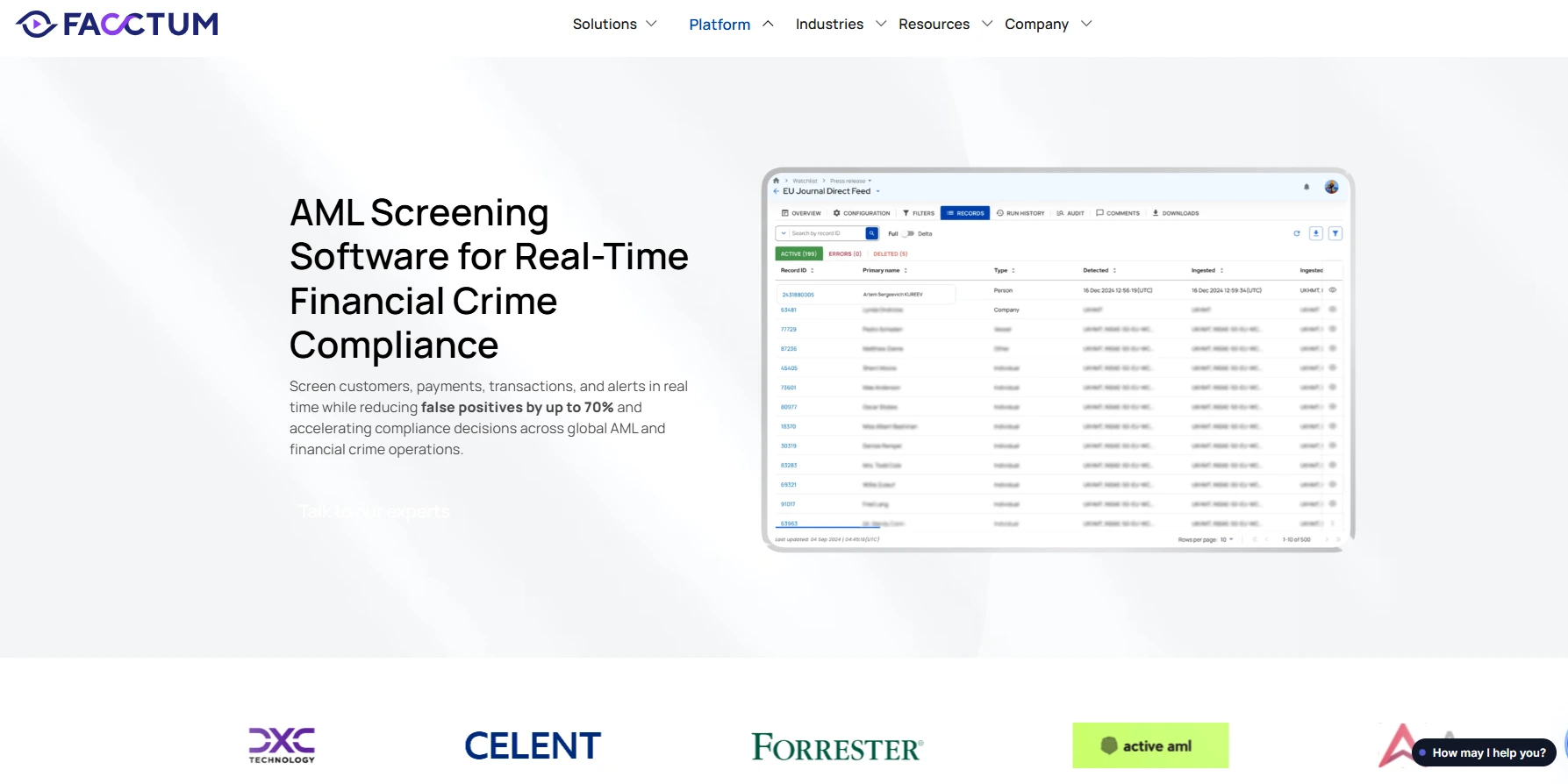
Facctum specializes in list management, list screening, and watchlist screening, which also encompasses list management and engines for high-volume payment and customer flows. It's likely to be a popular choice for organizations that have a strong focus on sanctions compliance, particularly in regard to payments.
Ideal for institutions that have high cross-border payments volume and have strong sanctions requirements.
Be aware of: Ensure its features are suitable for your entire stack, as screening tools may need to be integrated with KYC and case management software.
LSEG is a leading provider of risk intelligence and financial crime compliance solutions, trusted by banks and businesses worldwide for PEP, sanctions, and adverse media screening. Its World-Check database is widely recognised for its comprehensive risk intelligence data, extensive global coverage, and reliable information for AML and KYC compliance.
Best for: Big players and banks who require high-quality data & are willing to pay for it.
Be careful of: It is a data source and might require integration into a screening or workflow platform. Smaller businesses may find costs to be an issue.
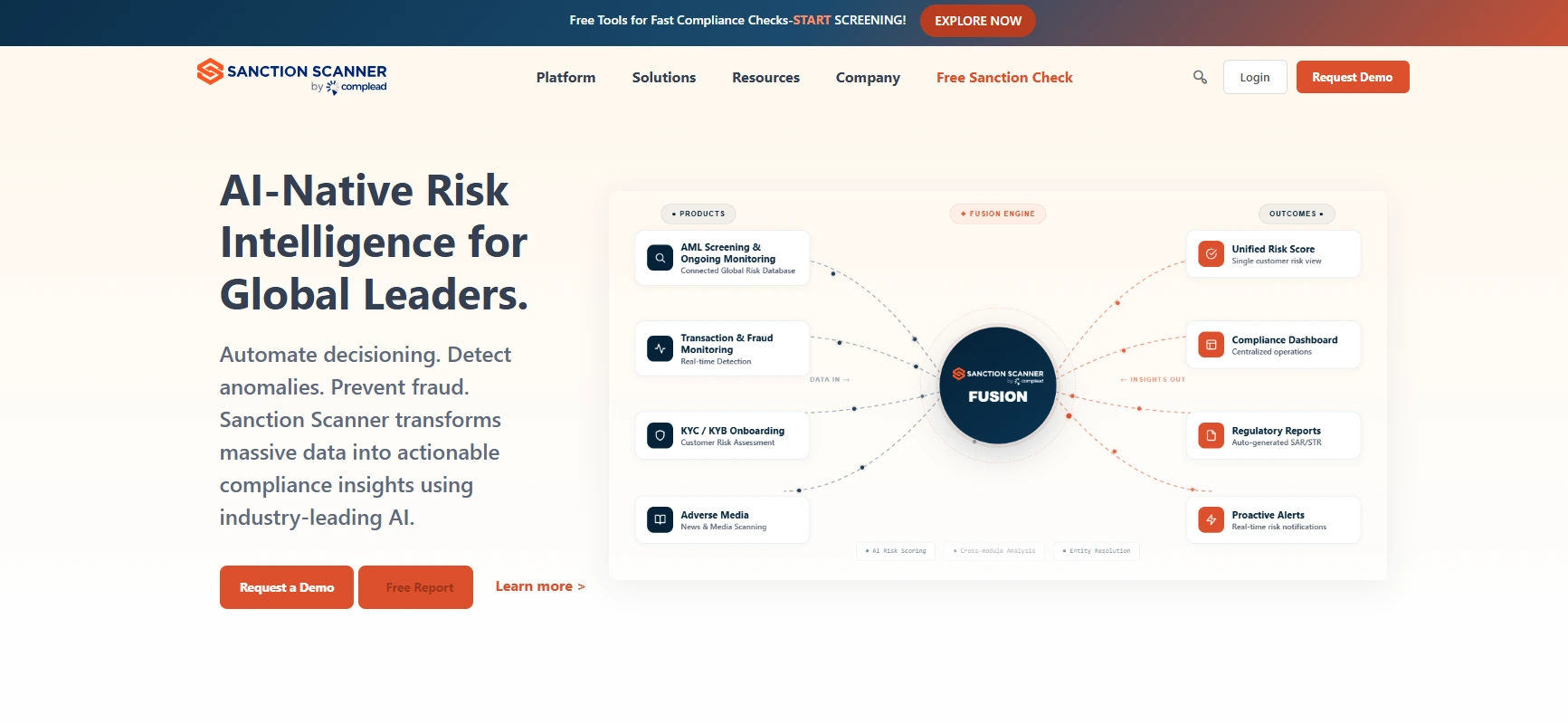
Sanction Scanner: Sanctions, PEP, and adverse media screening (easily set up) and monitoring. It is viewed as a convenient option by smaller regulated businesses, payment companies, and cryptocurrency businesses looking for an easy entry point.
Ideal for small and medium businesses and expanding companies for reliable screening without enterprise intricacies.
Be aware of: Assess volume, depth of coverage, and scalability as it increases.
Initially, Sumsub was an IDV company, and then added AML screening and monitoring. It's an addition to platforms that are digital-first and want document checks, liveness, and AML screening in one go.
Ideal for: Ecommerce sites, marketplaces, and fintech companies that value an easy and automated verification process.
Be mindful of: If you're more interested in case management and deep screening, a dedicated AML tool might be the better choice. Verify its flows with Indian KYC.
Last but not least, include both compliance and engineering. The most effective solution on paper is busted when it takes 6 months to integrate, or the analysts are unwilling to use it.
Also Read: What is Customer Screening and Why is it Essential for AML?
AML screening software is NOT a “check the box” exercise. With name variations, high volumes of onboarding, and active oversight from RBI and FIU-IND in India, it's the system that ensures your team is speedy, your decisions are defensible, and your business is credible with partners.
For larger banks, enterprise solutions such as NICE Actimize or Napier AI should be considered. In case you are a fast-growing fintech or NBFC, some vendors may be more appropriate, such as Signzy, IXSIGHT, ComplyAdvantage, and AML Watcher. If it is a high-end data product you need, LSEG World-Check is the one to consider talking to; and for smaller teams, Sanction Scanner and Sumsub may make sense.
Read the audit trail as an auditor, and do a real pilot of either, using your own names. The answer to this question is the best indicator of the usefulness of a tool.
Our team is ready to help you 24×7. Get in touch with us now!