Ixsight is looking for passionate individuals to join our team. Learn more



Ixsight is looking for passionate individuals to join our team. Learn more
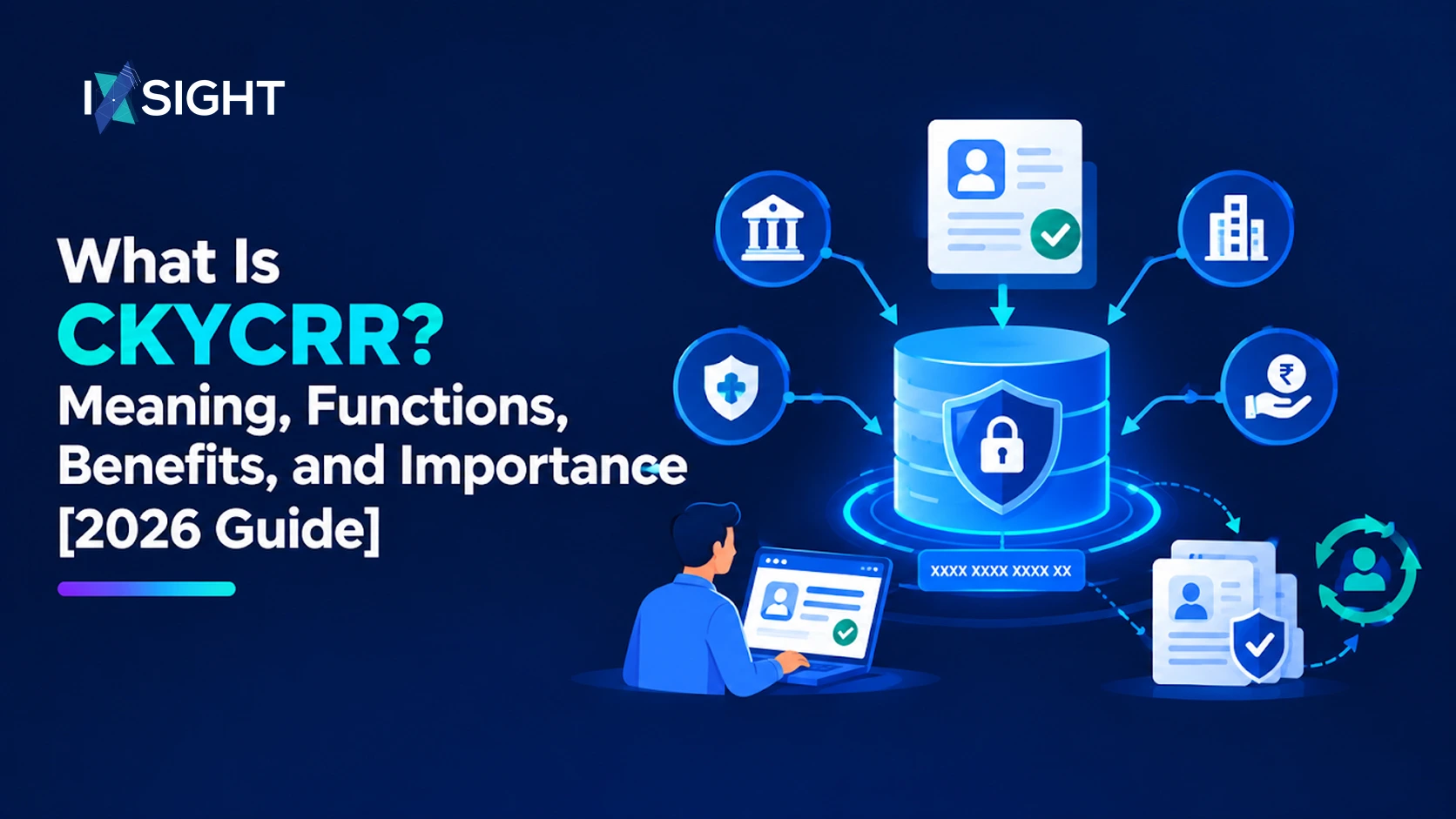
If you have opened a bank account, invested in a mutual fund, purchased insurance, or used another regulated financial service in India, your KYC information may be part of the Central KYC ecosystem. Understanding what CKYCR means can help explain how centralized KYC information is maintained and accessed by authorized financial institutions.
CKYCRR, or Central KYC Records Registry, is a centralized system for storing and retrieving customer KYC records across India's financial sector. It helps authorized financial institutions access existing KYC information instead of repeatedly collecting the same documents from customers, subject to applicable regulatory requirements. Financial institutions can use CKYCRR Upload Software to streamline the submission, management, and updating of KYC records within their compliance workflows.
The system is operated by the Central Registry of Securitisation Asset Reconstruction and Security Interest of India (CERSAI) and forms an important part of India's broader KYC and anti-money laundering framework. It can also work alongside AML software India to support customer due diligence, risk assessment, screening, and other financial crime compliance processes.
In this guide, we'll explain what CKYCRR means, how it works, what information a CKYCRR record contains, what a KIN is, how CKYCRR differs from CKYC, why it matters for AML compliance, and what financial institutions should know about CKYCRR in 2026.
If you're searching for ckycrr full form in banking, CKYCRR stands for Central KYC Records Registry. The full form of CKYCRR is Central KYC Records Registry. It is a centralized repository used to store and manage KYC records submitted by regulated financial institutions. It is a centralized repository that stores and manages KYC records submitted by regulated financial institutions in India. CKYCRR means Central KYC Records Registry. If you're searching for the CKYCRR full form, it refers to the centralized registry through which KYC records of customers are maintained and made available to authorized financial institutions under the applicable regulatory framework.
The purpose is straightforward: instead of every financial institution maintaining completely separate KYC records and repeatedly asking customers for the same documents, a centralized KYC record can be created and subsequently retrieved when permitted.
The Central KYC Registry is operated by CERSAI.
CKYCRR supports financial institutions regulated by authorities such as:
This makes CKYCRR an important piece of India's financial compliance infrastructure.
Before the Central KYC Records Registry (CKYCRR) was introduced, customers could face repeated document collection and verification whenever they approached different financial institutions. Understanding the CKYCRR full form helps clarify how this centralized approach was designed to simplify and standardize KYC processes.
For example, a customer might provide identity and address documents separately to:
CKYCRR helps reduce this duplication by providing a centralized mechanism for KYC information.
If you're searching for ckycrr record meaning, a CKYCRR record is the centralized digital KYC record associated with a customer. A CKYCRR record is the centralized digital KYC record associated with a customer. If a bank fetches a customer's CKYCRR record, it generally means the institution has retrieved the customer's available KYC information from the centralized registry.
A CKYCRR record contains a customer's verified KYC information stored in the Central KYC Registry. In simple terms, this explains the ckycrr record meaning and how customer KYC data is maintained centrally. Once a regulated financial institution completes the required KYC process and submits the customer's information to the Central KYC Registry, the record can be maintained in the centralized system. Understanding what CKYCR means also helps clarify the role of the registry in maintaining and making KYC information available to authorized institutions. A CKYCRR record may also be associated with a reference identifier used to locate or retrieve the relevant KYC information. If you are searching for ckycrr record bearing reference, this generally refers to the reference associated with a particular CKYCRR record or KYC record in the centralized system.
Depending on the customer type and applicable requirements, a CKYCRR record can contain information such as:
This may include:
The record can contain information associated with applicable identity documents, such as:
Customer address information and relevant supporting documentation may form part of the KYC record.
The centralized record may include the customer's photograph and other information required under the applicable KYC framework.
Where applicable, customer risk classification and other relevant KYC information may support the institution's broader compliance processes.
For companies, partnerships, trusts, and other legal entities, the KYC record can involve information relating to the entity, authorized persons, beneficial ownership, and supporting documents.
The exact information maintained depends on the applicable CKYCR template and regulatory requirements.
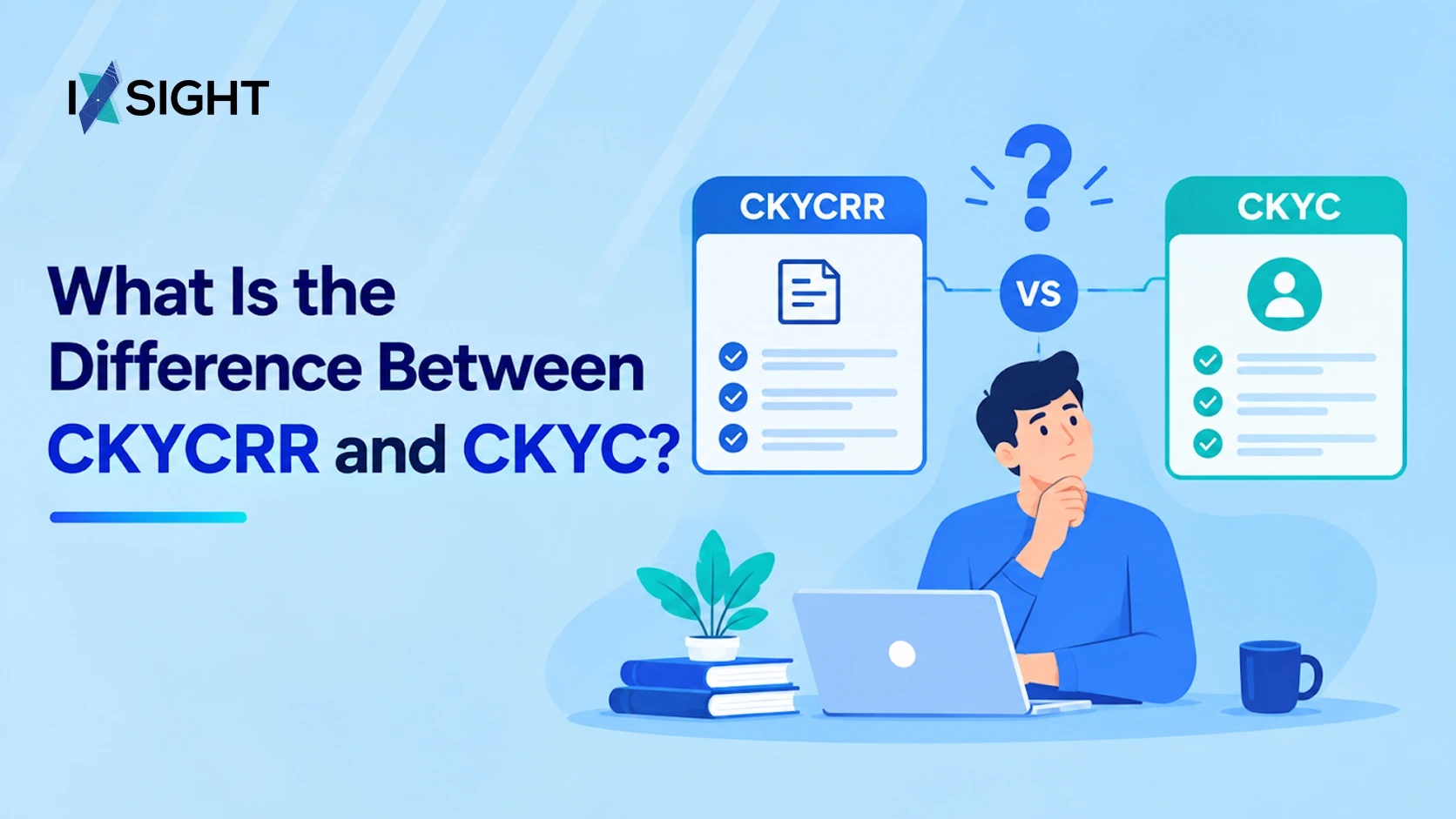
CKYCRR and CKYC are closely related terms within India's centralized KYC ecosystem, but they refer to different aspects of the process. Knowing the CKYCRR full form, Central KYC Records Registry, and understanding how it differs from CKYC can help financial institutions and customers better understand how centralized KYC records are created, maintained, and accessed.
The CKYCRR full form, Central KYC Records Registry, was introduced to standardize KYC processes across the financial sector, reduce repetitive documentation, and make customer KYC information easier for authorized financial institutions to access and manage.
Its main purposes include:
CKYCRR is more than a centralized document repository. It affects several stages of the financial customer lifecycle.
When a valid centralized KYC record already exists, an institution may be able to retrieve the information instead of requesting the same documents again.
This can reduce unnecessary delays during account opening and product onboarding.
Repeated document collection, verification, scanning, storage, and manual data entry can consume considerable operational resources.
A centralized KYC framework helps reduce this duplication.
Using a centralized KYC record can provide institutions with a common source of customer information, subject to applicable verification and regulatory requirements.
KYC information forms the foundation for customer due diligence and broader financial-crime compliance activities.
Reliable identity information can therefore support downstream AML processes.
Customers who already have a centralized KYC record may not need to repeat the entire documentation process when accessing another financial service.
The ckycrr full form in banking is particularly relevant for banks and other regulated entities that are required to maintain and submit customer KYC information.
Depending on the regulatory category, this can include:
The specific obligations can vary depending on the institution's regulatory authority, customer type, and applicable rules.
For this reason, financial institutions should evaluate CKYCR requirements against the regulations applicable to their own business rather than relying on a generic KYC checklist.
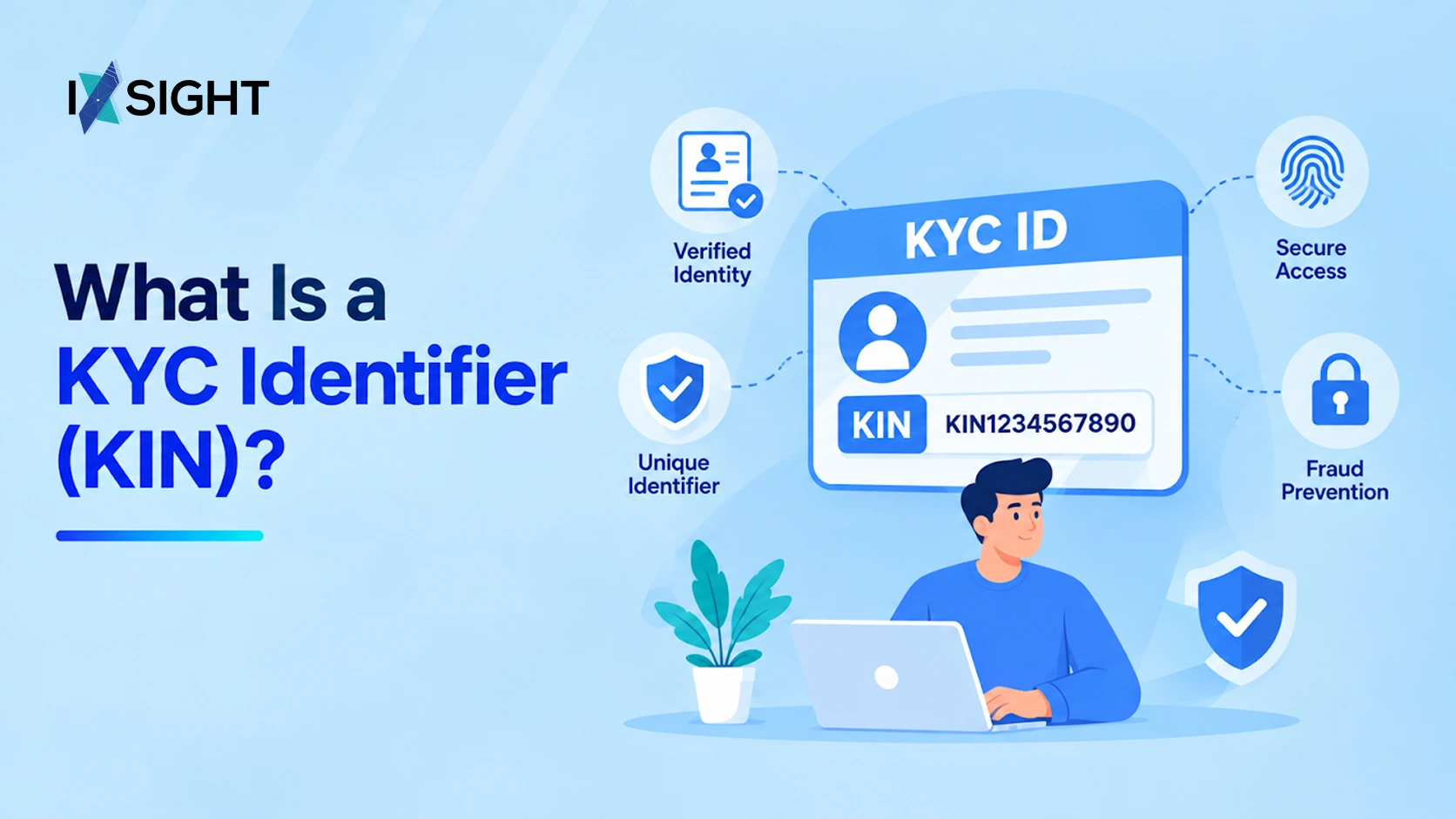
A KYC Identifier (KIN) is a unique 14-digit number associated with a customer's centralized KYC record.
The KIN provides a reference that allows authorized institutions to locate and retrieve the relevant KYC record through the Central KYC system.
Without a common identifier, institutions would have to rely on different internal customer numbers and identification mechanisms.
The KIN provides a standardized reference for the centralized KYC record.
For customers, this can reduce the need to repeatedly submit the same KYC information.
For financial institutions, it provides a consistent way to identify and retrieve centralized KYC records.
What does CKYCRR fetched by bank mean? It means that a bank or other regulated financial institution has retrieved the customer's existing KYC record from the Central KYC Registry for verification or further processing. The CKYCRR process can be understood through five basic stages.
When a customer approaches a financial institution, the institution can check whether a centralized KYC record already exists.
If an appropriate record is available and the applicable conditions are satisfied, the institution can retrieve the information.
If a suitable record does not exist, the institution collects the required KYC information and documents from the customer.
The information is then verified according to applicable KYC procedures.
The verified KYC information is submitted to the Central KYC Registry through the applicable process.
After the record is processed, a unique KYC Identifier is associated with the customer's centralized KYC record.
When the customer approaches another regulated institution, the existing record can be retrieved where permitted.
If customer information changes, the updated information must be submitted to CKYCR within the applicable regulatory timeline.
This creates a lifecycle in which the centralized KYC record can be maintained rather than recreated each time.
A CKYCRR record can contain different categories of customer information depending on the customer and applicable KYC requirements.
| Information category | Examples |
| Personal information | Name, date of birth, gender, nationality |
| Identity information | PAN, OVD details, applicable identifiers |
| Address information | Current/permanent address |
| Documents | Identity and address documents |
| Photograph | Customer photograph |
| Legal-entity details | Incorporation and organizational information |
| Beneficial ownership | Applicable ownership information |
| Authorized persons | Relevant signatory information |
| KYC status | Applicable KYC-related status and information |
The exact fields depend on the applicable CKYCR requirements and customer category.
The documents required depend on the customer type and applicable KYC requirements.
For individuals, commonly used KYC documents can include:
For legal entities, institutions may need information and documents such as:
Financial institutions should always follow the current regulatory requirements applicable to the relevant customer category rather than treating this list as exhaustive.
KYC information does not remain static.
Customers may change:
When a regulated entity obtains additional or updated customer information, the applicable CKYCR requirements require the institution to furnish the update within the prescribed timeline.
This is important because the value of a centralized KYC system depends not only on creating records but also on keeping those records accurate.
A typical lifecycle looks like this:
Customer information changes → Institution verifies the change → Updated information is furnished to CKYCR → Relevant entities are notified where applicable → Internal systems update their records
For financial institutions, managing this lifecycle accurately is an important part of KYC compliance.
CKYCRR provides benefits across different parts of the financial ecosystem.
A centralized KYC infrastructure helps create a more consistent approach to customer identification across different financial institutions.
CKYCRR and Customer Due Diligence (CDD) are closely connected, but they are not the same thing.
CKYCR provides centralized KYC information.
CDD is the broader process financial institutions use to understand and verify customers, assess applicable risks, identify beneficial owners where required, and meet their regulatory obligations.
A simplified relationship is:
CKYCR → KYC information → Customer Due Diligence → Risk assessment → Ongoing monitoring
A centralized KYC record can therefore provide useful information for CDD activities.
However, retrieving a CKYCR record does not automatically eliminate all CDD obligations. Financial institutions must continue to perform the checks and assessments required by the applicable regulatory framework.
KYC is one of the foundations of an effective AML compliance program.
An AML system needs reliable customer information to perform activities such as:
CKYCR can provide a centralized source of customer KYC information that supports these activities.
For example, when a transaction-monitoring system generates an alert, compliance teams need to know who the customer is and whether the underlying identity information is accurate and current.
A centralized KYC record can help provide that identity foundation.
This distinction is important.
CKYCR provides centralized KYC information, while AML software performs broader financial-crime compliance activities.
An integrated workflow can therefore look like:
KYC data → CKYCR → Customer profile → AML screening → Risk scoring → Transaction monitoring → Investigation
This integration can help financial institutions create a more connected compliance workflow.
Different financial institutions can benefit from centralized KYC infrastructure in different ways.
Although centralized KYC reduces duplication, implementing and maintaining the process can create operational challenges.
1. Poor data quality: Incomplete, inconsistent, or incorrectly formatted customer information can lead to processing problems.
2. Manual data entry: Manual transfer of customer information between systems increases the possibility of human error.
3. Duplicate records: Institutions need appropriate mechanisms for identifying and resolving duplicate or potentially matching customer records.
4. Outdated information: A centralized record is useful only when customer information remains current.
5. Legacy system integration: Older banking and financial systems may not easily integrate with newer digital KYC infrastructure.
6. Failed submissions: Institutions need processes to identify, track, correct, and resubmit failed KYC records.
7. Audit and reconciliation: Compliance teams need visibility into what was submitted, when it was submitted, whether it was accepted, and whether the internal system reflects the correct status.
8. Cross-system synchronization: KYC information may exist across core banking, CRM, document management, AML, and other systems.
Keeping these systems aligned can become a significant operational challenge.
CKYCRR 2.0 is the modernization of India's Central KYC infrastructure, introducing more technology-driven capabilities for data exchange, validation, verification, deduplication, security, and integration. For financial institutions, the transition requires greater attention to data quality, system connectivity, digital workflows, and operational readiness while continuing to meet applicable KYC and compliance requirements.
Preparing for CKYCR should involve more than simply submitting records.
Institutions should evaluate their entire KYC lifecycle.
1. Review existing KYC data: Identify incomplete, inconsistent, duplicate, or outdated customer information.
2. Map internal data: Understand where KYC information exists across:
3. Automate validation: Automated validation can help identify missing or incorrectly formatted information before submission.
4. Create exception workflows: Failed submissions and data mismatches should move into clearly defined review and correction workflows.
5. Maintain audit trails: Institutions should maintain records of relevant KYC activities for compliance and operational review.
6. Connect KYC with AML: Where appropriate, KYC information should feed into broader compliance workflows such as sanctions screening, PEP screening, risk scoring, and transaction monitoring.
Managing centralized KYC requirements can become difficult when customer information is distributed across multiple systems and workflows.
Ixsight's KYC and compliance technology can help financial institutions build more connected processes around customer identification, verification, risk assessment, and AML compliance.
A modern KYC compliance workflow can connect:
Customer onboarding → KYC verification → CKYCR → CDD → Risk assessment → AML screening → Ongoing monitoring
This approach can help organizations reduce manual intervention, improve data consistency, and create a more traceable compliance process.
For institutions preparing for evolving CKYCR requirements, the focus should not be limited to uploading KYC records. The larger objective is to create a reliable customer-data and compliance infrastructure that can support the complete KYC lifecycle.
Also Read: How KYC Risk Scoring Works: A Complete Guide
The Central KYC Records Registry (CKYCRR) is an important part of India's financial compliance infrastructure. If you're looking for the CKYCRR full form, it stands for Central KYC Records Registry. By providing a centralized mechanism for maintaining and retrieving KYC information, it helps reduce repetitive documentation and supports more consistent customer identification across regulated financial institutions.
Its importance extends beyond customer onboarding. CKYCR can support Customer Due Diligence, AML screening, risk assessment, customer lifecycle management, and broader compliance operations.
For financial institutions, the challenge is therefore not simply creating a KYC record. It is maintaining accurate information, managing updates, connecting systems, resolving data issues, and ensuring that KYC information can support the wider compliance lifecycle.
As India's centralized KYC infrastructure continues to evolve, organizations that connect their KYC, CDD, and AML processes can build a more consistent and efficient approach to customer compliance.
For banks, NBFCs, insurers, fintechs, and other regulated entities, the focus should be on creating a KYC infrastructure that is accurate, connected, auditable, and ready to support the complete customer lifecycle.CKYCRR 2.0? The correct AML software and middleware infrastructure can make the transition seamless – contact us to see how.
Ixsight provides Deduplication Software that ensures accurate data management. Alongside, Sanctions Screening Software and Data Cleaning Software are critical for compliance and risk management, while KYC Risk Scoring enhances data quality. Additionally, CKYCRR 2.0 Upload Software supports streamlined regulatory reporting and seamless compliance processes, making Ixsight a key player in the financial compliance industry.
Our team is ready to help you 24×7. Get in touch with us now!