Ixsight is looking for passionate individuals to join our team. Learn more



Ixsight is looking for passionate individuals to join our team. Learn more
All CRM migrations start with a quiet confidence: better visibility into the pipeline, new workflows, a new platform. Then one opens the customer information. Three records are provided for the same contact. A phone number that was previously inoperable but has since been turned on. A recently activated phone number that has been inoperable for two years. A business that merged with another business and is no longer in existence. A flag of consent for which no one can account. This is where Deduplication Software becomes essential, helping identify and consolidate duplicate customer records before they create further problems during migration.
The switch of a single platform turns into an archaeological dig.
Deduping data prior to CRM migration is not a last-minute job. One of the most important choices you'll make as a business is before deploying customer intelligence into a new system. Make a mistake, and it does not simply trickle on through; it cascades! For businesses that also rely on tools such as AML Software India to maintain clean, compliant customer data, data quality becomes even more critical. This guide explains the dirty data phenomenon, why it is detrimental to sales performance, why multi-source deduplication is hard, and how to take it on with a sense of urgency.
Any record that is irrelevant, outdated, incomplete, duplicated, or inaccurate is considered dirty data. Sometimes it's not so apparent. An individual's contact record can be incomplete and include a job title he or she held three years ago, a phone number to which calls are routed to a receptionist who refuses to pass them along, or an email address that has been bouncing for months without a reply.
Some examples of poor data for CRM are:
These categories are interrelated and reinforcing. It is not uncommon for a duplicate record to also be incomplete. A contact that is a long time out of date can contain incorrect firmographic information. If you have thousands or hundreds of thousands of records, multiply this by the financial impact, and you can begin to see the data quality issue that could be a problem.
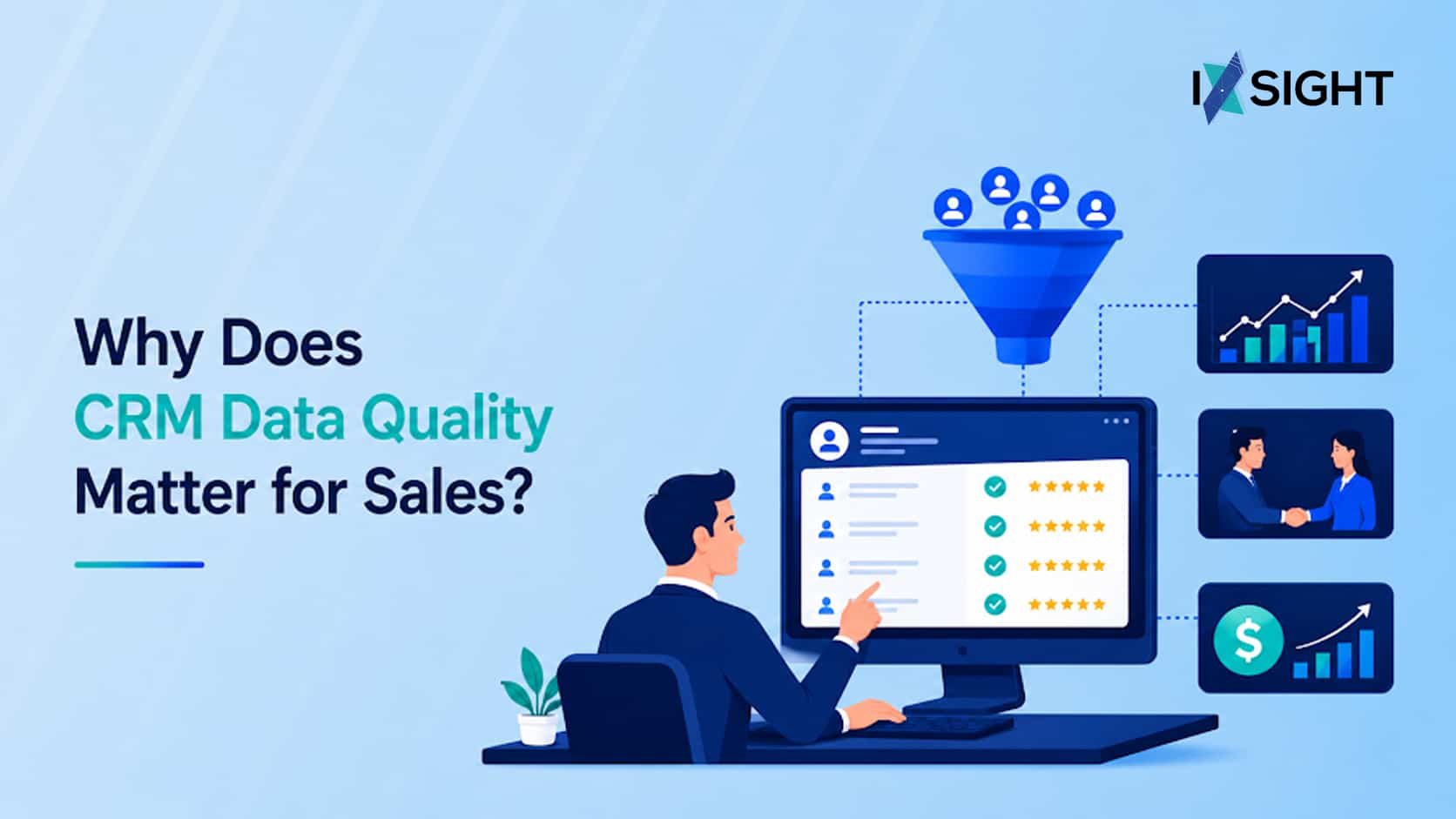
The simple answer is that everything your sales team does depends on the accuracy of the data in the CRM. From leads to territory assignments, to lead-scoring, forecasting pipelines, email campaigns, and account prioritization, it's all data-driven. The outputs are not reliable if the data is dirty.
According to a study from the 2025 State of CRM Data Management report by Validity, 37% of CRM users reported a loss of revenue as a direct result of low-quality data, while 76% noted that less than half of their organization's CRM data is accurate and complete.
About 62 working days a year, or nearly 62% of sales representatives' selling time, is lost validating contact information and correcting it, according to the data.
The lack of lead scores based on incomplete information and the absence of deal updates in the pipeline make it a set of assumptions rather than facts. Sales managers end up signing for numbers they can't believe, fail to hit their targets, and then have to resort to end-of-quarter tactics.
The dimension of compliance is serious, too. Duplicate contacts lead to inflated audience counts, suppression lists are blurred, and there is a risk that a contact that has opted out will be retargeted. When it comes to dirty CRM data, it is not just an operational issue for organizations that are subject to data protection regulations or those that are part of a financial services compliance program, such as AML software in India or other regulations. It's a regulatory disclosure.
An AML solution is not effective when operating in an isolated environment. High-quality data, if it can be captured and centralized in a CRM system and other internal data sources, is the key to a reliable AML program, since the outputs of the risk scoring and monitoring will only reflect the quality of the data that is fed into the system.
From wasted resources, lost opportunities, and operational drag, poor data quality can cost organizations millions of dollars each year, at an average of $12.9 million per organization per year, according to some estimates.
Typical deduplication systems are designed to locate duplicate records in a single dataset with a homogeneous structure. A CRM migration is not usually so neat and clean.
Multi-source CRM consolidation means combining data from multiple sources that have grown apart and may have been built under different departments or regulatory requirements. Some CRM systems may focus on sales activity history, while others may record marketing engagement data. Field names differ. Formatting conventions drift. Some of the records have a good amount of contact details; others have only the names and parts of account histories.
It's here that data deduplication software has to work harder in a migration than it does in the normal cleaning process. It's not just that you're looking for a duplicate of the same record within one system. You are dealing with a customer identity problem across systems that never had a common data model and were often developed by different teams with different priorities, sometimes spanning 10+ years.
Duplicate rates in enterprise CRM environments range from a high of 30 percent to a low of 10 percent, with the highest rates often occurring after a series of department-level CRM purchases, acquisitions, or years of failing to pay attention to import hygiene. Several studies suggest that a typical CRM data decay rate is about 22% per year, due to staff turnover, phone number changes, company mergers or closings, or people using a new email domain.
The decay rate becomes important because it means that problems are continually increasing. The data imported is correct at the time of import, but no longer accurate. The older the migration is, the older the existing records.
Multi-source CRM deduplication occurs when two or more distinct CRM systems have duplicate or fragmented customer records, which are consolidated into a single target system before the duplicate or fragmented data is removed. It involves reconciling differences in the structure, naming, formatting, and completeness of data across systems that are never meant to work together, unlike single-system deduplication.
The match key problem is an issue faced by practitioners, namely, the field or set of fields required to determine whether two records belong to the same person. Ideally, this would be a unique ID shared across all source systems. In practice, identifiers are frequently incomplete, inconsistent, or even missing.
While email addresses might be an accurate matching key, they must also account for shared inboxes, multiple addresses for one contact, and domain changes after a company rebrand. Phone numbers will do you no good until you run into inconsistencies, such as 07700900123 and 07700 900 123, which are two ways of referring to the same number, but the naive system treats them as two different values. Names aren't very reliable as primary keys, as they might all be the same name or three different names.
When there are no exact matches, teams resort to probabilistic methods. A probabilistic engine does not need to match all the fields exactly, but rather considers several fields and assigns a weight to each one based on its reliability, and then generates a confidence score that will determine if two records will be merged. Having the same email address is more certain than having the same city. Secondly, there is a matching phone number. A name that has a similar name, but is not the same reduces confidence, but still matches.
The upshot of this is that thresholds are very important. If they are set too high, then true replicas are not killed during the migration. If they're set too low, customers' distinct customer data records merge, compromising customer engagement data and possibly breaching consent records associated with each customer record.
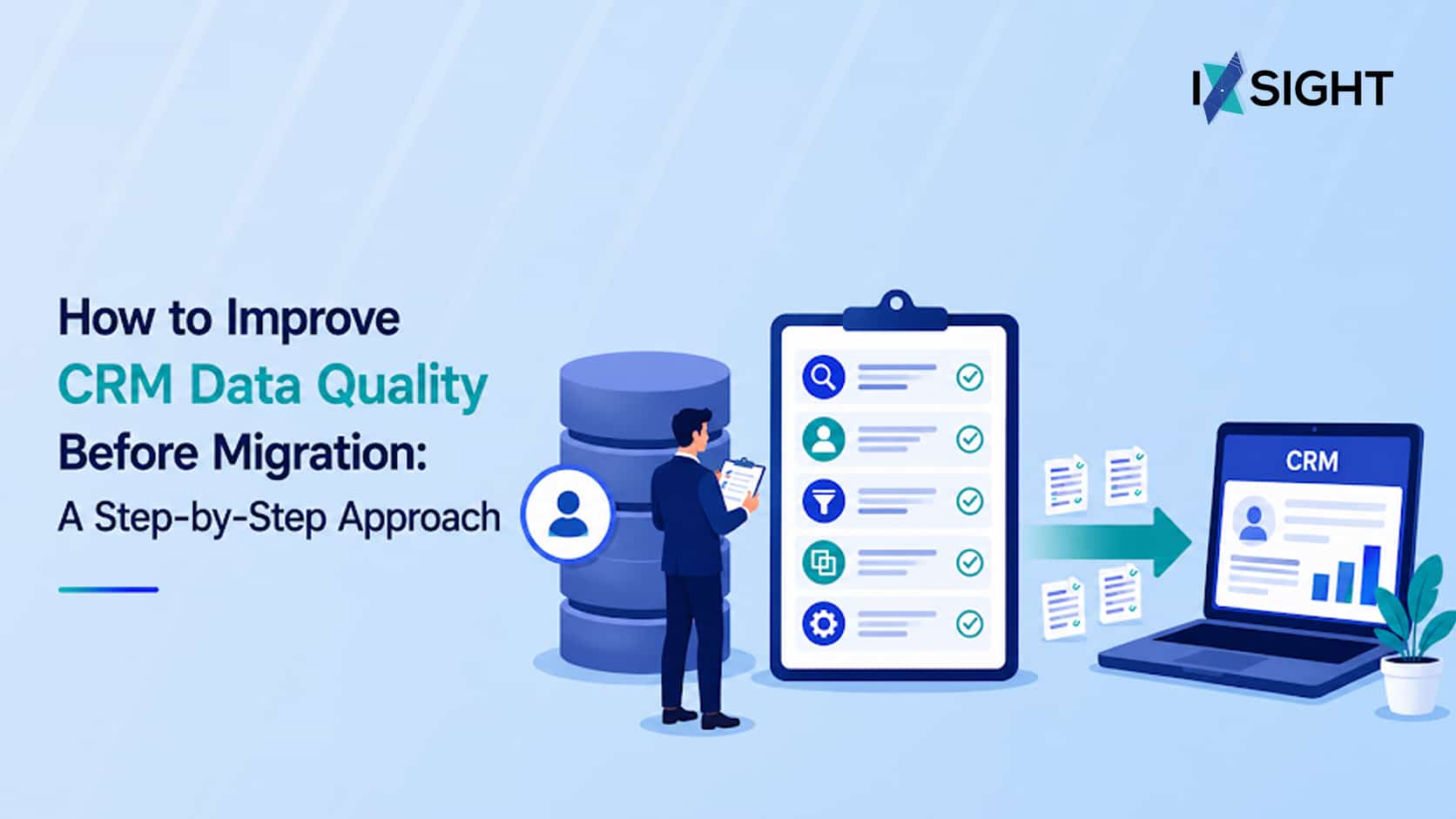
Any matching rule you try to create must be preceded by an understanding of what you are attempting to match. Data profiling involves studying each source system to determine the percentage of fields that are populated, the uniqueness of fields, common data formatting issues, and the distribution of key values in the data. A field that appears to have data in it might actually have junk values, in which case they will be represented by a null placeholder; test values are also included; generic values such as "N/A" and "Unknown" are also populated, but are not suitable to use as a match key field.
Profiling provides you with information about the systems that have the most viable information, the fields that can be used for the most successful matching, and the amount of remediation work required before you can begin the real work of deduplication. Teams that do not do this often find out later in the migration process, or during the migration itself, that it is a requirement: mid-migration when the data is already moving!
Matching can not be used effectively on unstandardized data. Phone numbers must be in a uniform format. There are many different ways of naming the same company, such as "Acme Ltd", "ACME Limited" or "Acme", and they need to be normalized to a single canonical form. Postal codes and addresses must be validated with authoritative data. Email addresses have to be validated to determine whether they are valid or have been bouncing silently for months.
Standardization sure isn't a show-stopping job, but it's what gets things done. Similarity can only be detected by data deduplication software if the data is expressed in terms that are the same.
Upon completion of the profiling and standardization, match rules can be set with a degree of confidence. The keys to success usually lie in the intersection of two elements: deterministic matching for those situations where there is enough certainty that the data in one record is enough to be matched with another (two records sharing the same email address are good examples of this); and probabilistic, weighted matching for situations where there is no single element that is truly definitive.
Calibrating a threshold should be considered a business risk decision. The various thresholds have different error profiles. If the only merged records have high confidence scores, some true duplicates will remain. A moderate confidence threshold will sometimes allow records to be merged when they are from different people. The business needs to make a clear decision regarding the type of error it is willing to endure and record before the migration process starts.
Deduplication determines which records are duplicates. The merged record visible is a function of the survivorship rules. With multi-source migration, the best data for one migration field is unlikely to be found in the same system as the best data for another field. The consent status may be more accurate in one CRM system than in the other. A second system might have a more complete record of sales activities than a first system.
Survivorship should be field-specific and include a rationale for each field. Which system has priority for being "opt-in"? Which of the following timestamps represents the latest interaction from a customer? When two opposing values seem justifiable, what is done? If there is no governance, these decisions are made as they go along during the migration, inconsistently and with little time to do so.
All important merge decisions made during a migration should be documented afterwards. The audit trail should include the records matched, the fields used for matching, the confidence score used, and the survivorship rules used to determine the output for each matched field.
This is important for compliance in financial services, in which the data governance mandate is formal. It is also important that, if there is a deviation from a customer record after migration, internal accountability requires that a salesperson or marketing analyst be able to explain what the record is made of and why it differs.
One retailer saved $1.4M by switching from SugarCRM to Salesforce. They were supported by an implementation partner, given special training, and had an oversight committee. However, 6 months after the data was audited, some 19 percent of their contacts were found to have invalid email addresses, and some were bouncing undetected for years. About 40% of the profiles had a key field that captured opportunity scores that was blank, one of the considerations that were used to inform the retention strategy.
Platform selection and implementation are not a solution to a dirty data migration, nor can the effort and cost of selecting and implementing a platform be offset by a lack of a good understanding and control of the data. The CRM system is as good as the records that it contains. If those records contain the shards, copies, and decay of many past systems, the new platform can address all those issues right away.
According to the report by the company Validity of 2025, employees waste 13 hours in CRM systems looking for information and 13 hours on selling.
Companies that approach migration pragmatically are simply moving the same customer identities through the "platform changes. Companies that see migration as just a platform replacement are bringing the same customer identities into the new system. Those that see migration as part of a larger data governance initiative find the very best segmentation, more accurate forecasting, and customer intelligence that can help with the decisions that it is expected to be made.
Also Read: The Definitive Guide to Data Deduplication Technology
Deduplicating CRM data prior to migration is detective work on a large scale. Clues are distributed throughout various systems. The connections between the records are unclear. The implications of a bad merge decision, or any kind of duplicate, are serious: loss of revenue, outbound squander, compliance risk, and a new CRM that needs to be scrubbed before it processes its first live sale.
Think of CRM data deduplication as a serious investigation, and you'll have a cleaner, more reliable knowledge database to build a successful business.
It's no small investment. Profiling, standardization, configuring the match rule, threshold calibration, governance, and audibility are all time-consuming and require expertise. But the other way is to suffer years of data problems until a system intended to correct them is finally implemented. This is a much higher cost.
Considering migrating to a CRM but not sure of the quality of the data? Always begin with a data profile. It will show you everything you need to know about the amount of work ahead of you and the risk you can avoid.
Ixsight provides Deduplication Software that ensures accurate data management. Alongside, Sanctions Screening Software and Data Cleaning Software are critical for compliance and risk management, while KYC Risk Scoring enhances data quality. Additionally, CKYCRR 2.0 Upload Software supports streamlined regulatory reporting and seamless compliance processes, making Ixsight a key player in the financial compliance industry.
Our team is ready to help you 24×7. Get in touch with us now!