Ixsight is looking for passionate individuals to join our team. Learn more



Ixsight is looking for passionate individuals to join our team. Learn more

There is hardly a more useful device than the shell company in the dark world of financial crime. They are organizations that are mostly enveloped by anonymity and provide support to those criminals who are interested in justifying illegal profits. However, what is a shell company, and why has it come to be associated with money laundering? This blog post goes deeper into the mechanics, implications, and countermeasures of shell companies in money laundering and illuminates an activity that costs the global economy trillions of dollars every year.
Obfuscation is very important in money laundering, which is the art of making money obtained illegally look legal. The shell companies are the best camouflage, as a criminal can keep a distance between his or her money and fit it into the legitimate economy. Based on estimations, it is estimated that money laundering contributes 2-5 percent of the world's GDP, which translates to about $800 billion to $2 trillion every year. A large percentage of these actions involve shell companies, be it drug trafficking, corruption, or tax evasion.
Doing business with shell companies is also important to regulators and law enforcers, as well as to businesses and individuals. In the time age where money laundering is a constantly at stake issue, awareness of these organizations may be the key to avoiding unknowingly getting entangled in an illegal web. We are going to discuss the definition of the shell company, the examples of shell companies in real life, and the role of technologies such as sanctions screening software and AML software in the fight against this menace.
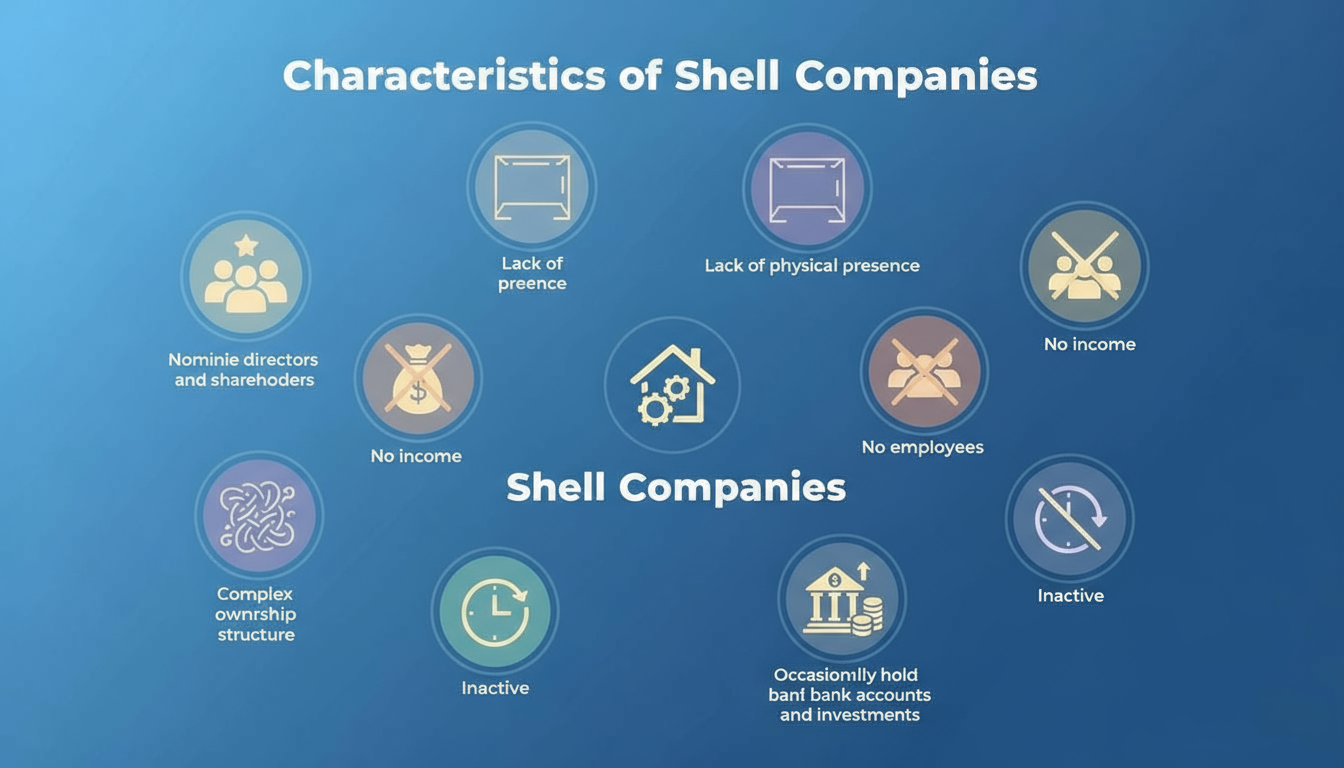
Fundamentally, a shell company is a legal organization that operates mostly on paper and has minimal or no business operations, assets, or employees. It is a registered corporation, limited liability company (LLC), or trust, but a facade instead of a working business. The definition of a shell company frequently emphasizes the absence of a physical presence, including an office or employees, and the little economic activity of the shell company. There is nothing illegal about these companies; actually, they have valid applications, such as a store of future enterprises or assisting mergers and acquisitions.
The contour, however, is blurred when shell companies are used to serve dark interests. They are desired by criminals due to the ability to confuse the ultimate beneficial owner (UBO), the individual who is really controlling and benefiting from the entity. This anonymity is ensured by complicated ownership arrangements, nominee directors (people who open fictitious addresses but do not really exercise any control), and incorporating in jurisdictions that have lenient laws, often offshore havens such as the Cayman Islands or British Virgin Islands.
Using the example, one can envisage the features that characterize a shell company: inactive, multifaceted chain of ownership, absence of income or revenue streams, and infrequent bank account or investment holding. These characteristics ensure that they are good at concealing assets. As an example, a shell company will be established in Delaware, USA, where the secrecy of corporations is high, and the owners of the shell company will be anonymous.
Startups may use legitimate shell companies to safeguard intellectual property, and investors may use them to raise capital anonymously. However, in the situation of financial crime, they become the means of deceit. FinCEN defines shell companies as non-publicly traded entities having no significant operation, and it is important to note that they pose potential risks in money laundering.
Their simplicity is attractive because they are simple to establish. In most jurisdictions, a shell company needs few papers to be set up, as there is no requirement for business existence and disclosure of the names of the owners. Their value in cross-border crimes is increased by this ease of creation, coupled with the interconnectivity of banking on a global scale.
To further break this down, the shell companies can be classified into shelf companies (registered but not active and thus can be activated within no time) and front companies (with some minimal operations to make them seem authentic). Shelf companies, especially, are acclaimed since they already have a history and hence are considered to be more credible..
Essentially, shell companies provide secrecy and freedom in legitimate business, but due to the anonymity they provide, they are a beacon to criminals. This duality is important to understand their contribution to money laundering.

Shell companies' money laundering is a complex game of integration, layering, and gaining placement- the three areas of money laundering. During the placement phase, illegal money is placed into the financial system. A shell company would open a bank account and deposit money in the form of business revenue.
The most complicated step, which is called layering, entails establishing a net of transactions to cover the source of the money. Here, shell companies shine. Money can be moved between several shells across jurisdictions, and it is almost impossible to track it. Here is an example of how the money obtained by selling drugs may be deposited in a shell in Panama, and then in another shell in Cyprus, and finally into a legitimate account.
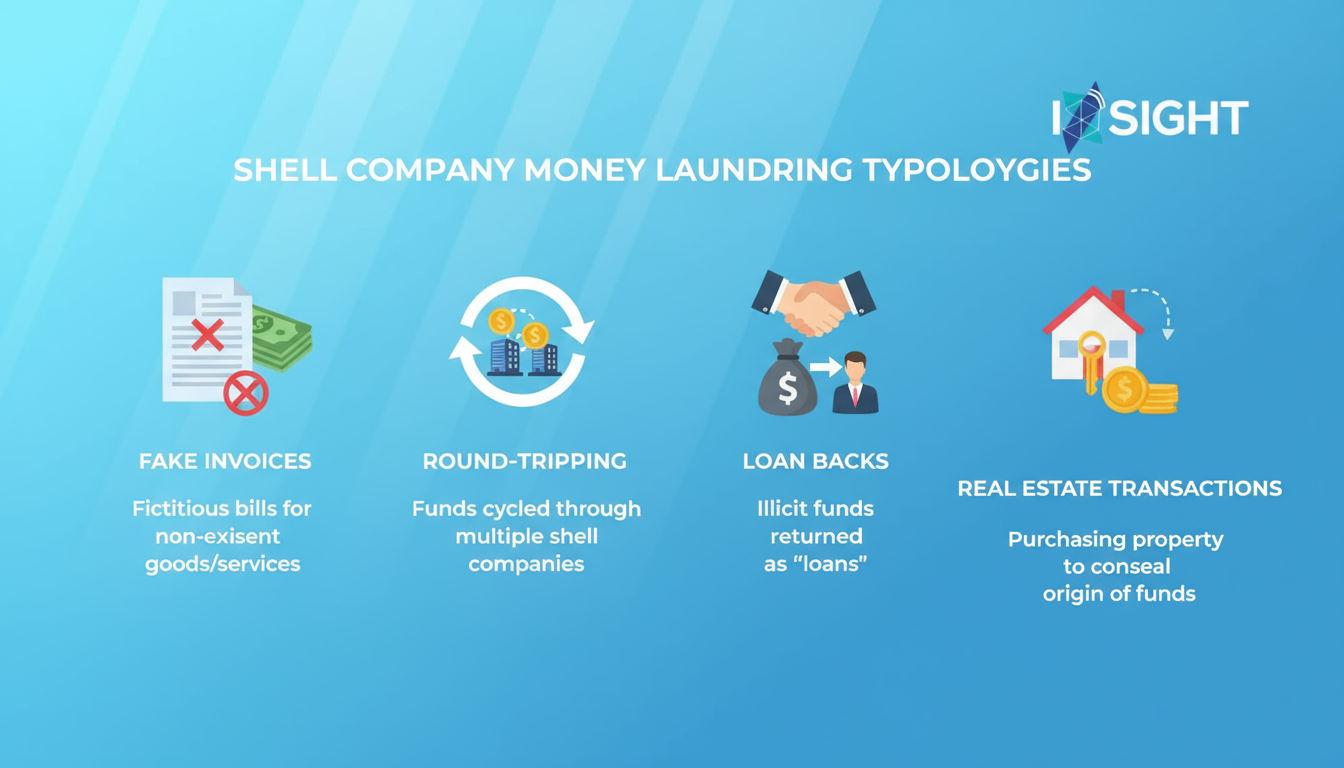
Common typologies include:
In integration, the money that is laundered finds its way back into the economy as a legitimate one. A shell may purchase dirty and clean stocks or other luxury assets.
Globalization increases the risks. Through the difference in the regulatory regimes, criminals use shells to avoid paying taxes, evade restrictions, or finance terrorism. In the case of businesses, entering into a shell deal may result in a tarnished image and a court case.
Further, shell companies also facilitate trade-based money laundering, with over- or under-invoicing covering up fund movements. A shell buys goods at high prices, and he turns in the difference with illegal cash.
The innovation of technologies introduces new levels of anonymization; the use of cryptocurrencies and digital shells anonymizes the transactions even more. Regulators are at a loss because the shells evolve, and their shells can automate laundering schemes with the help of AI.
The financial effect is appalling. Shell companies are a means of corruption, which robs governments of their revenue and skews market structure. In developing countries, they increase poverty by draining the money intended to fund public services.
International organizations such as the Financial Action Task Force (FATF) are to counter this with positive ownership registries, which involve the disclosure of UBOs. However, not all of that is enforced, which creates loopholes.
To conclude, shell companies are the key to the machinery of money laundering, which offers anonymity and flexibility that is exploited by criminals to the full extent.
The prevalence of shell companies is highlighted by real-world situations. The Danske Bank scandal is one of the most notorious shell company cases in Europe, which involved the largest money laundering scandal. In 2007-2015, the Estonian branch of Danske made close to EUR200 billion in suspicious transactions, a significant portion of which happened via shell companies that had been registered in the UK, Cyprus, and other countries. These are nominee directors' shells that brought funds from Russia, Azerbaijan, and other high-risk regions.
In the scheme, shells were used to transfer money to non-resident clients, bypassing checks on AML. The bank had not checked on UBOs, which resulted in fines and prosecutions of the executives worth more than 2 billion dollars.
The other case is the Panama Papers leak in 2016 that disclosed how Mossack Fonseca had established thousands of shells to conceal assets and launder money to its clients, which included politicians and criminals. Bribes, tax evasion, and busting of sanctions were done using shells.
In Malaysia, shell companies were used to loot the 1MDB scandal of 4.5 billion dollars from a state fund. Layering was done by shells in Seychelles and Singapore, and money was used to purchase luxuries such as yachts and art.
The FinCEN Files in the US revealed to the world how banks moved trillions of suspicious funds through the shells and disregarded the red flags, such as addresses not matching or a churning of funds.
These are some of the trends: fast establishment in a secrecy jurisdiction, use of proxies, and integration through real estate or investments. The consequences are a lack of confidence in the financial systems and demands for stricter rules.
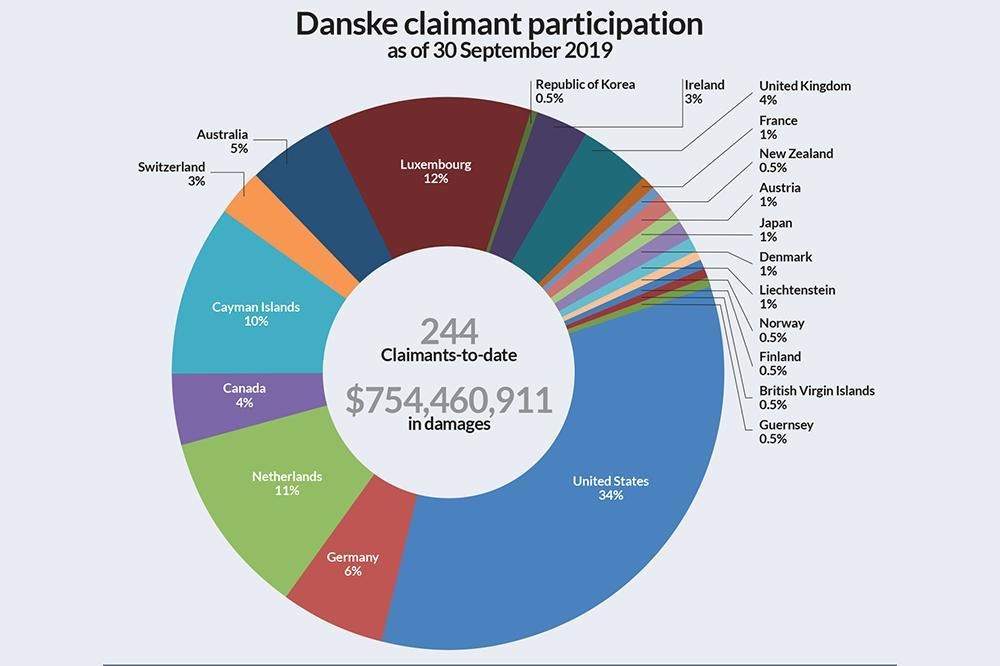
Source; lgcplus.com
Pie chart depicting claimant participation in the Danske Bank scandal litigation.
Recently, as of 2024, research on Russian oligarchs evading sanctions in response to the situation in Ukraine involved the purchase of properties and yachts through shells. These examples demonstrate the flexibility of shells to the new geopolitical facts.
The fight against shell companies needs powerful means. The software AML (Anti-Money Laundering) is an automated compliance tool to recognize suspicious patterns. It has features such as transaction monitoring, customer due diligence, and risk scoring.
Sanctions screening software compares specifically to watchlists of sanctions across the world, and finds connections with sanctioned organizations or PEPs (Politically Exposed Persons). The AI-based tools, such as Sanction Scanner or NameScan, minimize false positives by searching UBOs within shells.
In tracking shells, software examines red flags: high transaction volumes, geographic inconsistencies, or high turnover. It is more effective in integrating with helpful ownership databases.
The AML software will play a critical role in helping financial institutions fight emerging challenges such as sanctions evasion and crypto laundering, among others, in 2025, as the market will have overtaken the $3 billion mark. Top solutions are focused on accuracy and smooth integration driven by AI.
These should be used by businesses in addition to KYC (Know Your Customer) to reveal shells at an early stage.
Regulatory impetuses such as the AMLD directives of the EU require the use of enhanced due diligence of high-risk entities. One of the future trends is blockchain to track ownership transparently.
Through the AML and sanctions screening software, risks can be mitigated by organizations to guarantee compliance and avoid financial crime.

Source; ft.com
Visual representation of the Danske Bank money laundering scandal, combining currency notes and the bank signage.
Also read: Suspicious Activity Reports (SARs) and How They Combat Financial Crime
Shell companies in money laundering are still an uphill climb, but they can soon be addressed with awareness and technology. Through knowledge of what a shell company is and how it is used maliciously, we will be able to develop a more transparent financial environment. Be on the lookout, install AML tools, and join the fight against this worldwide vice.
Ixsight provides Deduplication Software that ensures accurate data management. Alongside Sanctions Screening Software and AML Software are critical for compliance and risk management, Data Scrubbing Software and Data Cleaning Software enhance data quality, making Ixsight a key player in the financial compliance industry.
Our team is ready to help you 24×7. Get in touch with us now!