Ixsight is looking for passionate individuals to join our team. Learn more



Ixsight is looking for passionate individuals to join our team. Learn more
All banks, NBFCs, insurers, and fintech companies in India operate with customer data. Records accumulate in various systems as a result of onboarding forms, KYC uploads, CKYC submission, transaction records, and sanctions checks. If that same person, account, or transaction is recorded more than once, that pile becomes a liability. This is especially important for organizations using AML Monitoring Software, where duplicate or inconsistent records can affect transaction monitoring and compliance decisions. That's where deduplication comes in, and that's where things go awry in the shadows.
Deduplication seems like a trivial technical problem - identify duplicate records and delete or consolidate them, maintain clean data. In reality, the issues compliance and IT teams deal with are the same from one industry to another. When a vendor shows off some demo data in the box, it looks so easy, but real production data is dirtier, much dirtier, than any data in the box, and that's where most deduplication projects find their problems. Below, we will examine what deduplication is, why duplicate data still exists, and seven typical challenges that can ruin deduplication and potential solutions.
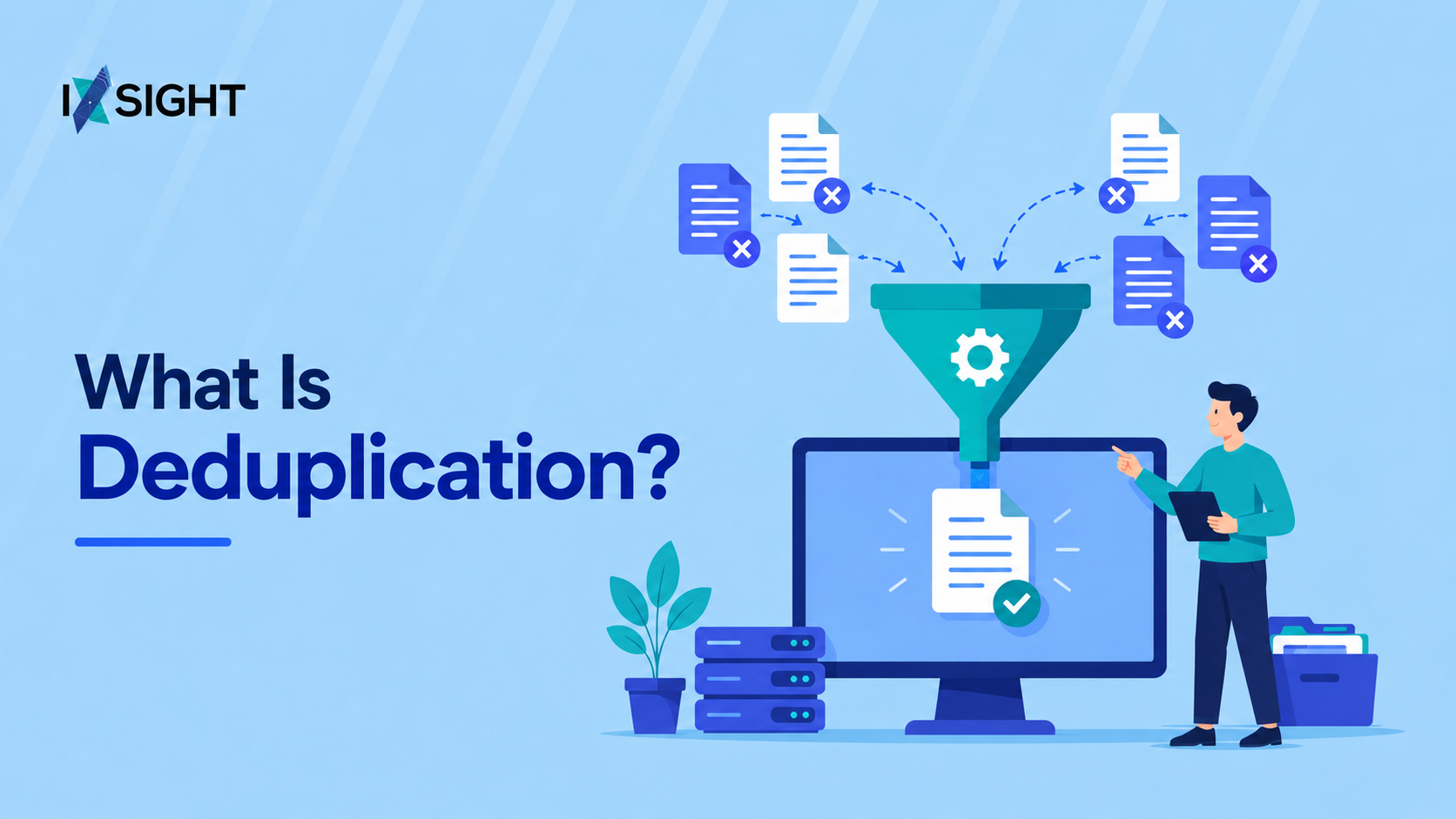
Deduplication is deciding which records, files, or data items refer to the same real-world object (customer, account, transaction, etc.) and merging the real-world object using the correct data. Generally, in banking and financial services, deduplication is used for customer master data (CMD), such as name, PAN, Aadhaar-linked identifier, mobile number, address, KYC documents, etc
A good Deduplication Tool is not just going to match the name string. It must be able to deal with spelling differences, differences in transliteration between English and local languages, inconsistencies in dates and addresses, and almost identical but not quite the same documents. In India, in the case of AML software, deduplication is imperative. It is linked directly to the regulatory provisions of the Prevention of Money Laundering Act (PMLA) along with the RBI's master directions on KYC/AML that mandate that all institutions keep a single, verifiable customer view of their customers.
It is important to grasp the sources of duplicate records prior to solving the issue. There are some common reasons that emerge in nearly all organizations:
All of these causes are non-exotic. They're the typical rub and grime of operating a big organization that has several teams, systems, and data entry points. But the problem is, when ignorance of these kinds of friction grows out of hand, they accumulate into a big data quality and compliance issue.
Also, duplication isn't always a by-product of the design. Some duplication is intentional and useful, e.g., in the case of KYC documents, backup copies of these documents are kept for disaster recovery purposes; or customer records are archived for audit purposes. The purpose of deduplication software isn't to delete all copies of all records. It's about discovering and disambiguating duplicate records that cause confusion, compliance issues, and wasted resources, and not touching unique, valid, and meaningfully created records.
Not every duplication is created equal, and there are various risks associated with the different types of duplication.
There are implications for monitoring AML that differ between each type. There is a high cost of storing and processing mostly duplicate data. Near duplicates and cross-system duplicates are much more harmful as they can cause a single high-risk individual to be represented by several low-risk customers, and can be difficult to detect after the fact when screening watch lists and monitoring transactions.
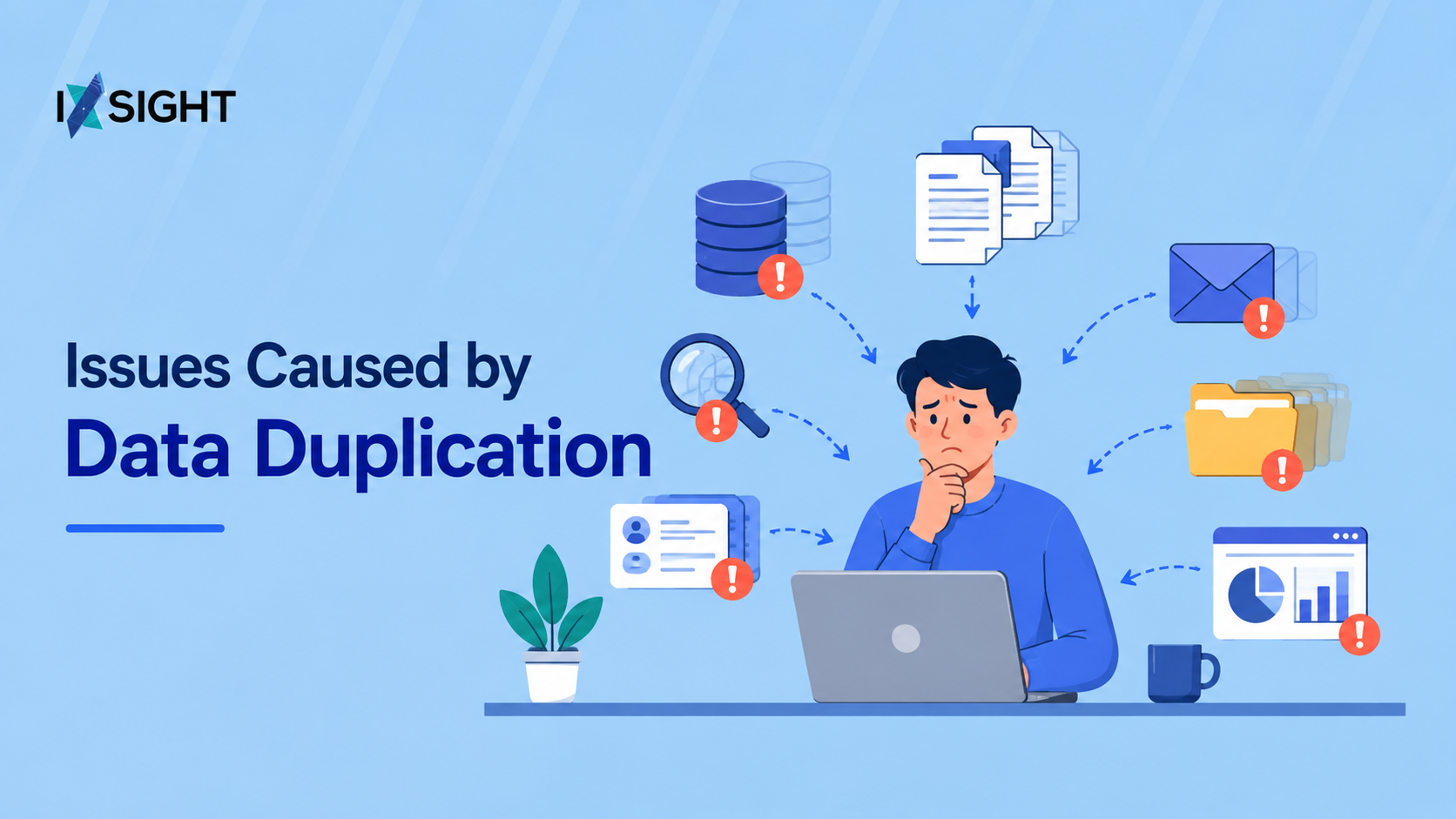
There is hardly any time when duplicate data isn't a pain in the butt. In a regulated financial world, it engenders a series of downstream issues:
Each of these problems could be considered a single problem. Some additional information here, a slightly larger customer base there. It's the impact of these issues over time that is the real trouble. If that duplicate is not resolved during onboarding, it reappears in the transaction monitoring six months later, and a year later for regulatory audit, and each time it’s more costly and risky than if it’s resolved at the source. That's why deduplication should be considered primarily a compliance control, not a housekeeping chore.
In this context, here are the seven problems that become apparent as soon as organizations attempt to perform deduplication at scale.
A low deduplication rate indicates that the software is not deduplicating a significant portion of the duplicates that are present in the data. This typically occurs due to overly strict matching criteria, which only match literal values, and because the data fields are not being matched using fuzzy logic, which allows for matching values with misspellings, transliteration errors, or missing fields. In India, where names can be used in various formats and addresses have different structures, a rules engine designed for one standard/consistent naming will always be less efficient.
Fix: Use the deduplication software with configurable fuzzy matching and phonetic algorithms and weighted scoring on multiple fields like name, date of birth, PAN, mobile number, address, etc., instead of a single-field match. Test the match rate periodically with a sample of well-known duplicate matches to ensure that the engine is catching the correct matches.
This is one of the most underrated issues: the deduplication process is executed, and a report is generated, but the report is incorrect. It may report "0 duplicates found" when there were actually duplicates, but they did not match in the matching job or were not included in the job by accident. If teams don't review the deduplication logs carefully, they could end up believing the reports that they should be looking for a clean database when they're actually just seeing a clean report.
Fix: Add required completion checks, pre-and post-record counts, and exception logs that highlight records that the engine was unable to process. In a deduplication status report, it is important that it report what was scanned, not what was found.
Sometimes the level of confidence of a deduplication match is exaggerated by the vendor or internal team. A system could have a 95% confidence level in two records, but without evidence of actual results, that isn't very significant. Not having a review layer could mean that two different people could become one when the match was done with high confidence, and this can be worse than if they weren't matched at all.
Fix: Establish a realistic baseline. Suppose that a match rate is below a certain level, typically around 85-90%, based on data quality, and requires a human review step prior to merges. To see if there were any auto merges that were correct, conduct periodic sampling.
For many organizations, the first time they run the deduplication process, they feel like they have "cleaned" their database system and then they move on. However, the second the data gets added to the system, whether it's from new onboarding, batch uploads, or manual corrections, new duplicates begin to form. If it is not deduplicated continually as part of the data pipeline, the database, which was clean six months ago, slowly gets reloaded with duplicates.
Fix: Deduplication should be performed at the time of data entry (real time/near real time checks on onboarding) as well as on a scheduled basis throughout the entire database. Think of it as an ongoing data hygiene initiative, rather than a project with a set termination date.
Deduplication that only scans a single database fails to account for a significant class of duplicates: The same customer in the core banking system, in the loan management system, and in the CRM, each with slightly different data. It's the same problem that CKYCRR is designed to help solve at the national level; a person may have multiple KYC records across different regulated organizations. This is the whole category of duplicates that deduplication software that doesn't operate system-to-system, or deduplication software that can't integrate with a central repository, leaves open.
Fix: Use deduplication software that is capable of integrating with multiple internal systems and external registries such as CKYCRR via the API to perform checks. Focus on interoperability instead of a tool for cleaning just one database.
Deduplication software can only work with the data it's given. Even the best matching engine will have a problem finding “true” duplicates when incoming data is not consistently formatted, missing some critical attributes, or contains typos. It's not uncommon for organizations to purchase comprehensive deduplication solutions, hoping to make up for years of poor data entry habits, only to be frustrated with the performance of the tools.
Fix: Use upstream data validation and pair it with a pair of fixers that deduplicate data. Implement compulsory fields, standardized formats, and unique identifiers (PAN, CKYC reference ID) at the time of capturing the data. The more clean data fed into the deduplication engine, the more effective it will be.
Even if the right software is installed, no one is responsible for the deduplication, and it stalls. Compliance teams think that IT is dealing with it, IT thinks that compliance is looking at flagged matches, and in the meantime, duplicate records languish in two places for months on end. If there's no governance established-who will look at matches flagged for deduplication, who will approve any merge, how will exceptions get escalated-then deduplication software becomes a software that produces reports that no one is willing to do anything about.
Fix: Ensure that there is clear ownership (usually shared between compliance and data management groups) and that there are agreed service levels for examining and resolving flagged duplicates. Don't let deduplication metrics be a background IT activity, but part of regular compliance reporting.
While many general data management resources exist, they don't always capture the urgency that is present in the Indian regulatory environment. In the Indian context, with the PMLA obligations, RBI's master directions on KYC/AML functioning, and the move towards real-time, API-driven verification under the new CKYC 2.0, financial institutions are likely to keep accurate and deduplicated customer records as a compliance requirement, rather than as a best practice. This is more than just a data hygiene concern; a low rate of deduplication or an incorrect deduplication report indicates a regulatory exposure.
For the Indian market, AML software must cater to local naming conventions, multilingual data collection, PAN and Aadhaar-based identifiers, and be compatible with the Central KYC (Central KYC Registration) system, which is maintained by the Central KYC Association of India. Other market-specific generic deduplication software often fails to perform optimally, as it was not developed with this in mind.
Also Read: What Is Data Deduplication? Methods and Benefits
Deduplication isn't a one-time switch. It's a continuous practice that includes the proper application of software, upstream data quality, integration across systems, and internal ownership. Deduplication failures are extremely common at banks, NBFCs, and fintechs, and the above seven problems comprise a vast majority of the failures.
It pays to get it right, much more than a cleaner database. It enhances the accuracy of AML screening, minimizes false positives, increases audit readiness, and provides a full, reliable picture of all relationships for the customer-facing teams. It's not a desirable feature for institutions that are subject to the changing KYC and AML regulations in India. It is the basis on which other compliance issues will be based.
Ixsight provides Deduplication Software that ensures accurate data management. Alongside, Sanctions Screening Software and Data Cleaning Software are critical for compliance and risk management, while KYC Risk Scoring enhances data quality. Additionally, CKYCRR 2.0 Upload Software supports streamlined regulatory reporting and seamless compliance processes, making Ixsight a key player in the financial compliance industry.
Our team is ready to help you 24×7. Get in touch with us now!