Ixsight is looking for passionate individuals to join our team. Learn more



Ixsight is looking for passionate individuals to join our team. Learn more
Financial institutions lose large amounts of money to insider fraud every year, often involving individuals trusted to manage funds.Embezzlement meaning refers to a type of finance-related wrongdoing in which a person who has been legally given money, property, or assets uses them for personal benefit. Embezzlement is a much more complex crime than simple theft, which involves taking an item that one was never authorized to handle. A payroll officer may manipulate overtime payments, a charity director may make covert directed donations, or a bank employee may transfer customer deposits into their own account. These acts constitute embezzlement and are among the most harmful and difficult-to-detect forms of financial crime. AML software can help financial institutions detect unusual transactions, identify suspicious patterns, and strengthen controls against such insider fraud.
The category of embezzlement (also known as asset misappropriation) makes up the lion's share of occupational fraud cases in the world, according to the Association of Certified Fraud Examiners (ACFE) report on Occupational Fraud 2024, which found that the median losses from embezzlement cases exceed six figures. These schemes typically involve a lack of a proper control system, which can go undetected for months or years until someone has a sinking feeling of doom. An important reason why embezzlement is so risky is that it doesn't exactly scream its presence. No break-in and no forced entry, and often there is no immediate indication of trouble. It's a dollar leak, and it leaks some more until some audit, whistleblower, or regulator catches the leak.
Knowing how embezzlement can materialize is not an option for banks, fintechs, NBFCs, and other regulated entities. It has a direct impact on compliance, internal fraud controls, and reputation. In this article, we will explore the definition of embezzlement, whether it's a serious crime, the top seven cases that you may run into, the repercussions of embezzlement, and how you can use software to discover and prevent embezzlement before it gets out of hand.
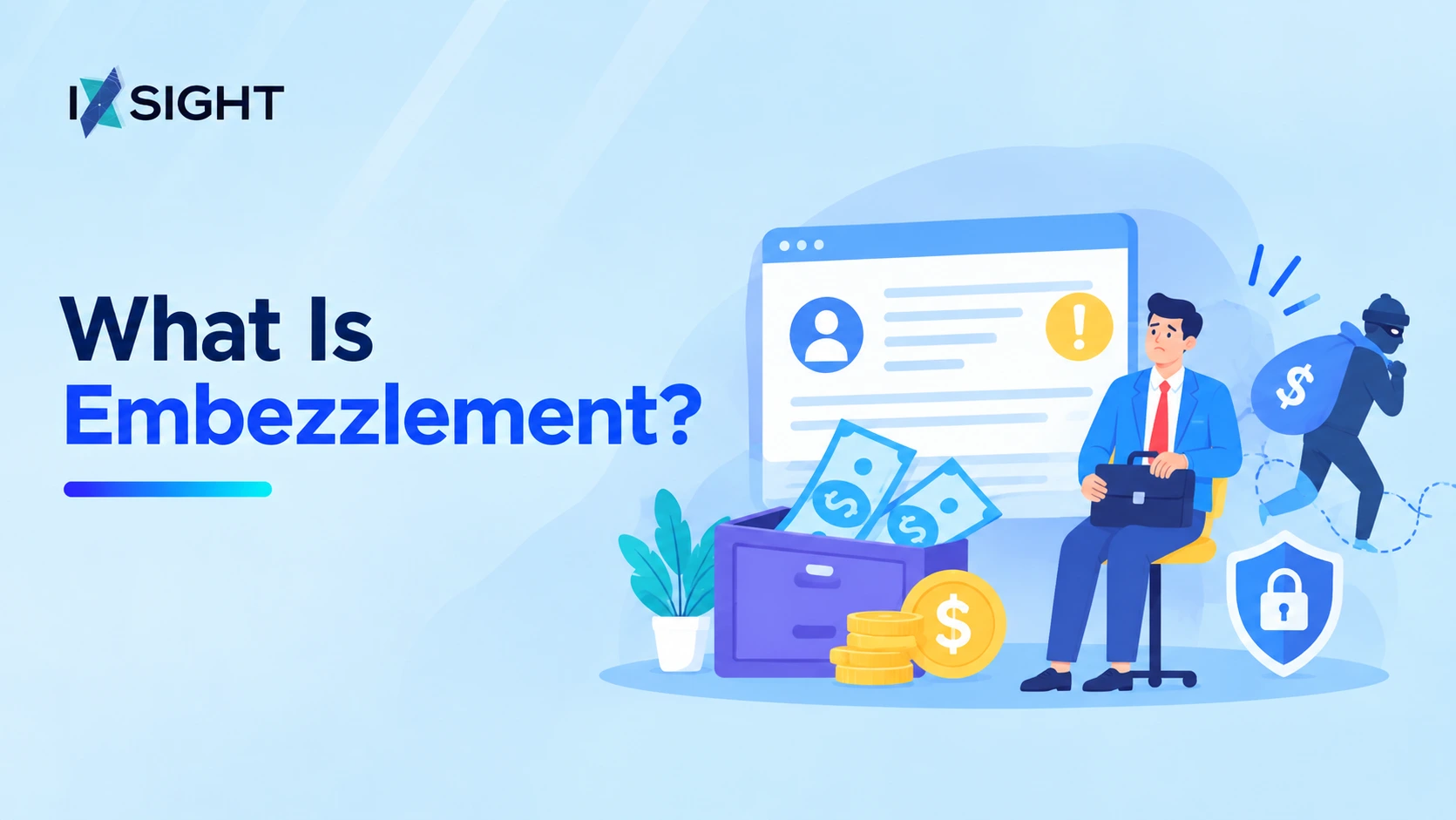
Embezzlement is a type of finance-related wrongdoing in which a person who has been legally given money, property, or assets uses them to benefit himself or herself. Embezzlement is a much more complex crime than simple theft, which involves taking an item that one was never authorized to handle. In contrast to simple theft, which starts with the absence of any right to touch, embezzlement always involves access. A person, such as an employee, manager, trustee, or public official, is entrusted with funds or assets as part of their job responsibilities, but then uses that authority to misappropriate the funds or assets.
It's an important one, both legally and practically. Embezzlement is sometimes more difficult to detect than theft, as there is often authorization to access the funds. The transactions can be cloaked in the appearance of being routine, records can be doctored, and the diversion can go undetected for a long time until discrepancies appear during an audit or whistleblower report.
Embezzlement can happen in virtually any situation where cash or valuable property moves through another person's hands, such as in corporate finance departments, nonprofit organizations, government agencies, banks, and even in a small family business. The magnitude of the theft can vary from a cashier using the ATM card for a few dollars a year to a corporation using shell companies and funneling millions away over time. The common element in all of the cases is that someone in a fiduciary or employment relationship has betrayed the trust of that relationship for the benefit of self.
It should also be noted that embezzlement is not similar to other words that are used interchangeably. Embezzlement is just a subset of fraud, which always involves a lawful initial access, and fraud in turn is a bigger term that encompasses any type of deception done to gain monetary advantage. Larceny, on the other hand, is defined as the taking of property without any right to do so. The distinctions are important for compliance teams because they may impact the investigative method, evidence collection, and reporting requirements for a case, depending on its classification.
Yes, embezzlement is a serious crime and, in most legal systems, it is a felony, not a petty crime. Below are the three reasons that usually lead to this categorization.
In addition to financial loss, embezzlement also involves “betrayal” of the institution, and as such is regarded seriously by regulators, auditors, and law enforcement bodies around the world.

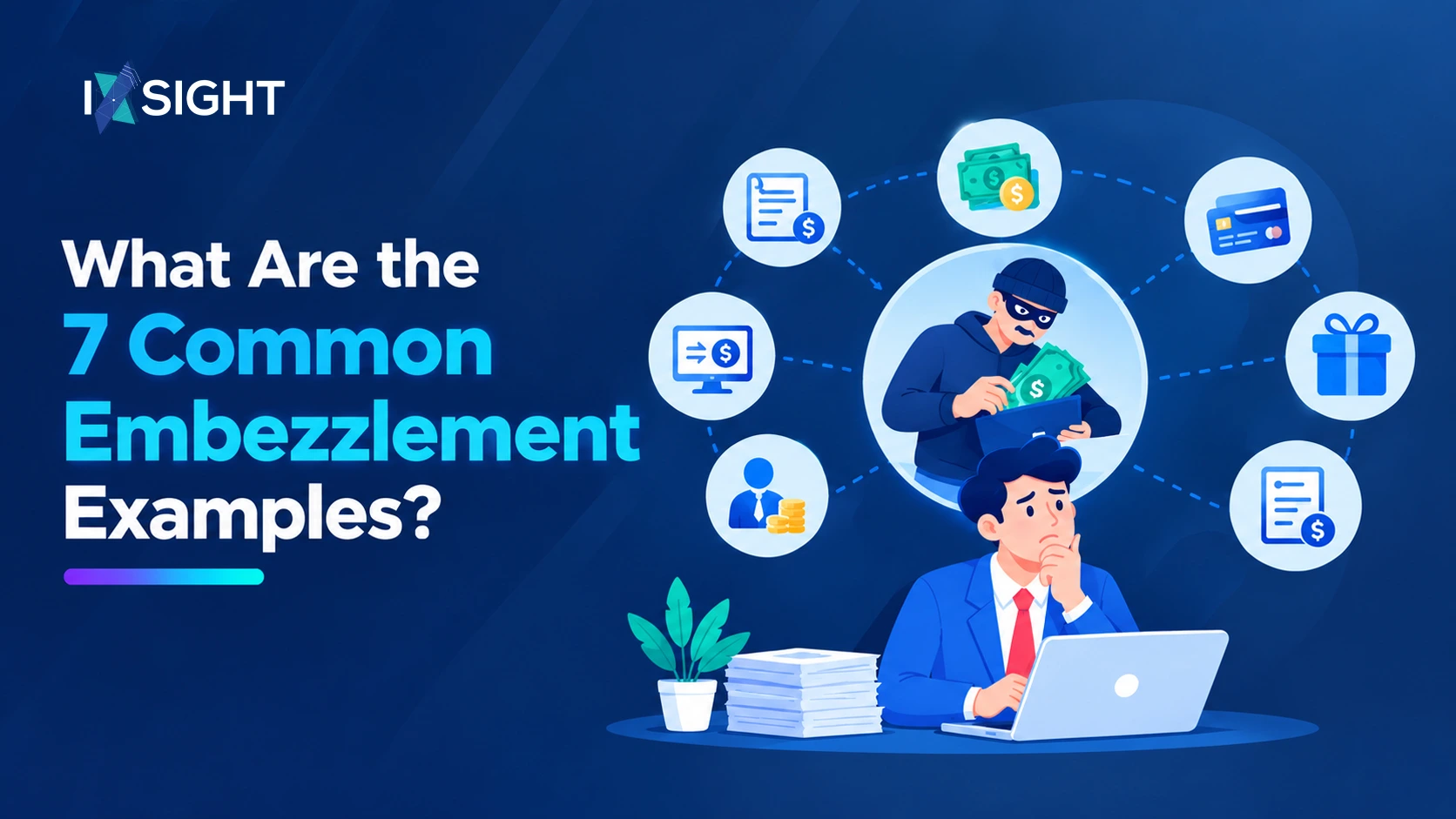
The definition of "embezzlement" is broad and can assume many forms, depending on the nature of the business or employment, the position of the employee, and the complexity of the internal control that is in place. Here are 7 examples of commonly encountered data in financial institutions and corporations.
Payroll Fraud occurs when any individual who has access to payroll systems uses them for unauthorized purposes to gain. This can be done by adding fake "ghost" workers or by approving time that was not worked. It typically flourishes when there's no distinction between the individual approving payroll and the individual verifying it. This is a particular vulnerability for organizations operating in units or with multiple branch offices or little oversight of payroll.
Fake overtime is a close relative of payroll fraud and is defined as lying about hours worked to receive additional overtime wages that were not earned. One way perpetrators exploit this is that they may have a weak supervisory approval process, sometimes with a manager who does not check, or they may have poor timekeeping systems. Irregular hours are more difficult to cross-check, making it especially risky for businesses that have complex shift patterns, remote employees, or need to track time manually.
The Ponzi scheme is a fraudulent investment arrangement that relies on funds from new investors to pay old investors, but does not generate any actual return. The success of these schemes relies on a constant stream of fresh money, and they fail when there are fewer new investors or when a large number of investors want to take their money out simultaneously. Ponzi schemes are a combination of securities fraud and a clear-cut case of embezzlement of investor money, promised with fake returns to future investors.
Charity theft is when the people responsible for using donated money for charitable purposes use it for personal gain. These are examples of some common methods: overinflating vendor contracts, expense claim forms that are not legitimate, or using personal or shell accounts to directly transfer donations. Charities are particularly vulnerable to this type of embezzlement because they are less likely to have the robust internal controls that commercial businesses do and because they depend on the public's trust.
Check kiting involves a type of bank fraud that entails taking advantage of the float time, the time between writing a check and it being cashed. A perpetrator writes checks that are signed on accounts that have insufficient funds, and transfers money from one account to another to appear as if there are sufficient funds in the account. The notion behind this scheme is the time lag between settlements of the banks, and usually it's exposed when a bank alerts them to the presence of irregular checks or when the float window closes unexpectedly. Most banking regulations consider it to be embezzlement and wire fraud.
Siphoning is the systematic, usually small-scale, manipulation of financial or payment systems to divert money. This often happens in a modern environment via electronic payment systems, with small, irregular payments being quietly made away over time and hoping they don't get noticed. Perpetrators are particularly interested in high-volume transactions because the small discrepancies are more likely to fall through the cracks during standard reconciliation procedures if it isn't granular enough.
Lapping is a type of accounts receivable fraud that occurs when an employee takes some payment from an incoming customer and uses a subsequent customer's payment to pay the first customer what they owed. This is a cycle of concealment that perpetrators need to keep in place and need to keep detailed but false records. Lapping schemes usually work themselves out when a customer requests an explanation for a discrepancy in the payment or when the scheme's perpetrator can no longer catch up with the increasing number of accounts that need to be covered.
The following are examples of embezzlement: not a comprehensive list, but rather some of the most common patterns that compliance teams and auditors come across. In the real world, there are many cases that involve multiple techniques, such as a payroll scheme that then morphs into check kiting in order to conceal the growing deficit.
Punishment for embezzlement is widely varied among jurisdictions, and typically depends upon the amount that was embezzled, the nature of the victim, whether it is public office or public funds, and whether it was a first-time occurrence or not.
Embezzlement in many nations is a felony if it exceeds a certain amount, and a prison term that can be several years to over a decade awaits the culprit. Penalties are the strictest for cases involving government funds, public officials, or when fiduciary responsibility is breached to those who cannot protect themselves, for example, pensioners or beneficiaries of charitable organizations. The penalties for embezzlement by government officials of public funds in some jurisdictions may be as long as twenty years in prison, and this is because the government takes the misuse of taxpayer money seriously.
In addition to jail time, courts often order restitution payments from offenders, which are the amounts taken from them, and large fines. Additional penalties for those professionals convicted of embezzlement include the revocation of their professional licenses, disqualification as a company director, and damage to their reputation and future employability.
Financial institutions face repercussions from an internal embezzlement case, much more than just the direct financial loss. Being hit with a regulatory fine can be a disaster for the reputation, and it can take years before the damage is felt by clients. When an embezzlement case surfaces, shareholders, depositors, and business partners will think twice about their relationship with an institution, and it takes much longer to restore their confidence than to retrieve the embezzled money.
This is why detection and prevention are now a top priority for banks, fintechs, and other regulated financial institutions, especially in rapidly growing markets such as India, where financial institutions and the volume of digital transactions are growing quickly and need strong internal controls. Institutions are expected by regulators, both in India and elsewhere, to show proactive skills in the detection of fraud, as opposed to relying on periodic audits, which are only likely to reveal embezzlement at some point after the losses have been incurred.
Embezzlement doesn't usually occur as just one theft. After the diversion, the money launderer normally needs to transfer, disguise, or re-enter the financial system, where anti-money laundering controls come into play. With modern AML software, financial institutions are now equipped with the ability to detect the signs of embezzlement much earlier, often before the losses are substantial.
In emerging markets such as India, where digital banking, adoption of fintech, and cross-border payments are gaining momentum, it is no longer a luxury feature to have AML software with these capabilities as part of its portfolio. For institutions that have robust internal controls and intelligent, automated screening and monitoring capabilities, they are much more likely to be able to detect embezzlement early, minimize financial losses, and meet the regulatory requirements that come with being a player in an increasingly regulated financial landscape.
Also Read: What is AML Software and How is it Important to Businesses?
Embezzlement is a secret, trust-based offense and can go on for years without detection if internal controls are inadequate. By recognizing these prevalent schemes- payroll fraud, lapping, Ponzi schemes, and check kiting-compliance teams can have a starting point to look for red flags before they become too dangerous to ignore. When combined with modern AML software that can screen watchlists, detect adverse media, monitor transactions, and perform dynamic risk scoring, financial institutions have a real opportunity to catch embezzlement early, not after it's done.
Ixsight provides Deduplication Software that ensures accurate data management. Alongside, Sanctions Screening Software and Data Cleaning Software are critical for compliance and risk management, while KYC Risk Scoring enhances data quality. Additionally, CKYCRR 2.0 Upload Software supports streamlined regulatory reporting and seamless compliance processes, making Ixsight a key player in the financial compliance industry.
Our team is ready to help you 24×7. Get in touch with us now!