Ixsight is looking for passionate individuals to join our team. Learn more



Ixsight is looking for passionate individuals to join our team. Learn more
All financial institutions, fintech, and payment businesses handle the transfer of thousands of customers' money. A large number of these customers are common folk who are paying rent, operating a business, or remitting money to their families. A small number are not, and the individuals seeking to launder money usually don't advertise themselves. They break up deposits into smaller amounts, transfer money through unrelated accounts, or divert it into a seemingly normal company where the money originates.
Reading statements line-by-line is not a compliance team's way to see that behavior. That's an amount of water that is just too much. This is where AML monitoring software can be of service. It analyzes the transactions and customers' actions in real time, identifies odd behavior, and provides analysts with a manageable list of cases to review, rather than a sea of data.
This guide not only provides a simple explanation of how the technology works but also the process from the initial data feed to the final regulatory report, why businesses should not overlook it, and how this relates to KYC and India's Central KYC Records Registry (CKYCRR).
AML monitoring software is an automated solution to monitor transactions and account activity among customers to identify indicators of money laundering, terrorist financing, and other financial crime. It will compare what the customer is doing to what you think the customer should be doing and what you know that the customer shouldn't be doing.
Imagine that you have in your head an extremely patient analyst that sleeps at night. It involves all kinds of deposits, withdrawals, and transfers, card payments, and cross-border remittances. The software evaluates each one based on the rules, thresholds, and behavior models. If it is not a fit, then an alert is raised. It is then up to a human investigator to determine if it was a false alarm or if it needs to be reported to the regulator.
This is not to be confused with a number of other things people will think of:
While in practice several of these are wrapped into a modern platform, the monitoring engine is the one that takes into account the current behavior. Relying on rule-based detection, which is easier for auditors to understand, alongside statistical and machine learning detection, which may detect patterns that no one has created a rule for.
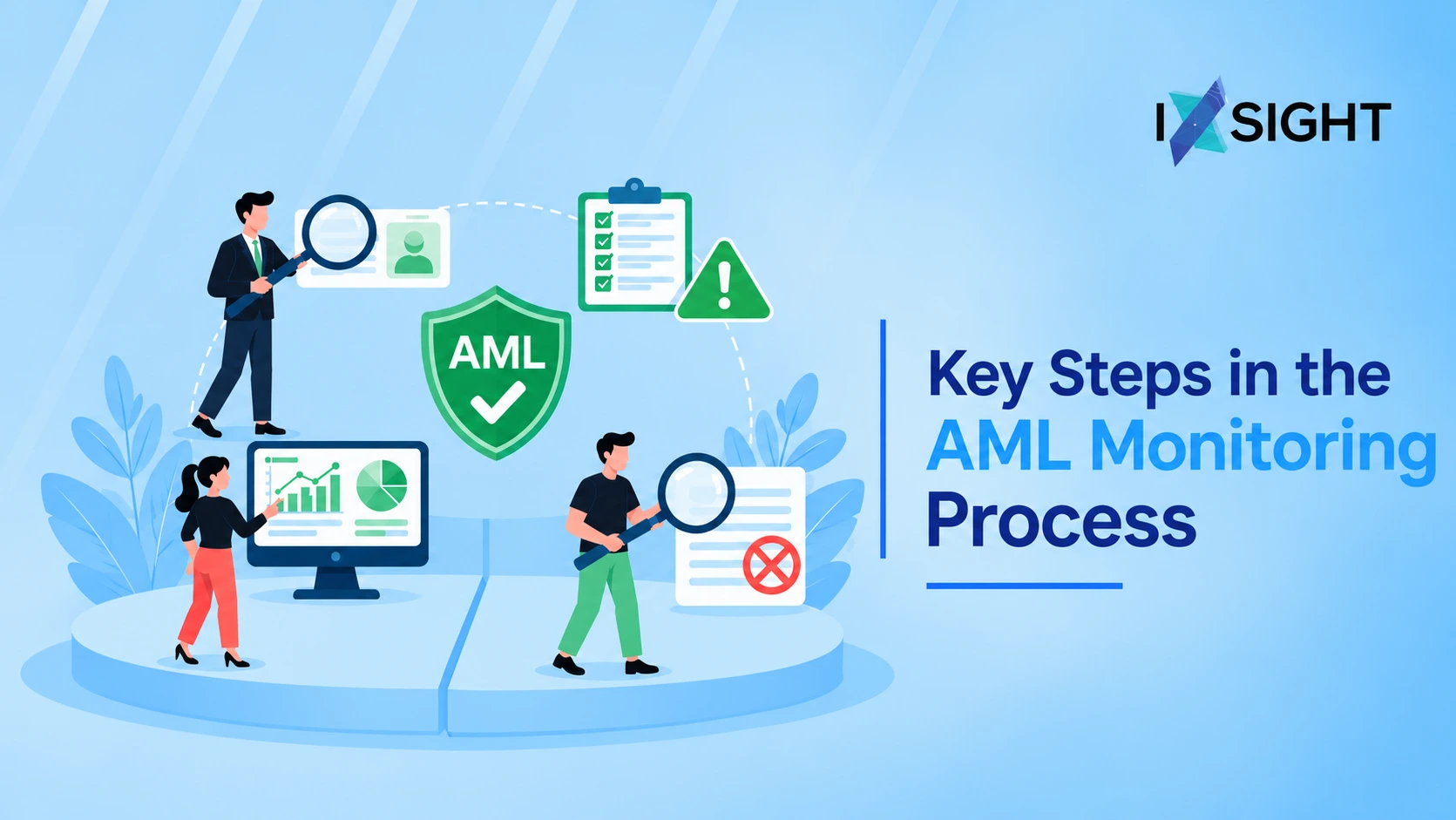
The protocols are similar for each monitoring programme, but vary in the details depending on the institution.
The quality of the data that is being fed into the monitoring is equal to the quality of the monitoring. The software fetches transactions from the core banking, payment gateways, card systems, and wallets. It also brings in data related to the customer's profile, which he/she has provided during onboarding, like Occupation, declared income, address, etc and products that the customer has.
This step might not be as pretty as it sounds, and is likely to be the most difficult. Data resides in various systems, various formats, with missing data and duplicate customer records. Good software cleans, matches, and standardizes it, and makes one customer equal to one customer in all products.
The system gives a risk rating to every customer prior to making a transaction. Factors typically include the customer type (individual, company, trust), country/countries, industry, products employed, delivery method, and if the individual is politically exposed.
At the bottom are the people who have a basic savings account and work on a salary basis. A business that's cash-intensive and has foreign shareholders and foreign transfers is located above. This rating is important in determining the level of surveillance assigned to a person and the time that must be spent to review alerts from that person.
This is the basis of the procedure. The software looks at each transaction and runs it through its detection logic. Common scenarios include:
The defined rules are captured in rules. Behavioral models provide a baseline of behavior for every customer and for groups of customers and highlight any behaviors that are deviant. A store owner who just has a bunch of small transactions from people he doesn't know looks different than a store owner who doesn't. A shop owner who suddenly gets a bunch of small transactions from people he doesn't know looks different than a store owner who doesn't.
If an alert is triggered by a transaction or pattern, the system generates an alert. Channeling alerts into a queue is not a good platform. It scores and prioritizes them and clusters related alerts for the same customer along with the context an analyst needs, recent transactions, risk rating of the customer, previous alerts, and the reason the alert fired.
This is the game-changer in helping your team to work productively or drown in noise. Unoptimized systems may produce a lot of false positives, in which case the analysts spend a large part of their time on harmless activity.
An analyst starts the investigation of the alert and reviews the big picture. They can look at the customer's source of funds, request information from the relationship manager, view documentation, and linked accounts. Case management tools ensure that this work is organized, that all decisions are documented, and that an audit trail is maintained.
As a result, there are two possibilities. The alert is either closed (with a documented reason), or it is escalated for a possible suspicious report. These two results must be explained in writing, as it's something that regulators will require later.
If, after an investigation, suspicious activity is identified, the institution must report it to the appropriate authority. For instance, in India, a report on suspicious transactions is submitted to the Financial Intelligence Unit–India (FIU-IND), along with other prescribed reports, such as Cash Transaction Reports (CTRs). AML software can facilitate report pre-population, validate formats, and track reporting deadlines, reducing the manual workload of compliance teams.
There's never a time when monitoring isn't necessary. Criminals adapt, products change, and customers change. Teams regularly discuss what scenarios are helpful and what are not, resulting in alert thresholds and logic. Customer risk ratings are updated on an ongoing basis and when there is a significant event. The models are checked to ensure that they continue to function properly.
This loop is where the distinction is made between a paper programme and a programme that really works.
The answer is twofold: it is by law, and there is a real risk.
A robust system doesn't just meet a compliance requirement; it also provides benefits.
Self-explanatory to a limit as well. A policy that is not clear and data that is not good isn't going to be corrected by software. Ideally, the technology should be combined with trained analysts and designed processes to produce the best results.
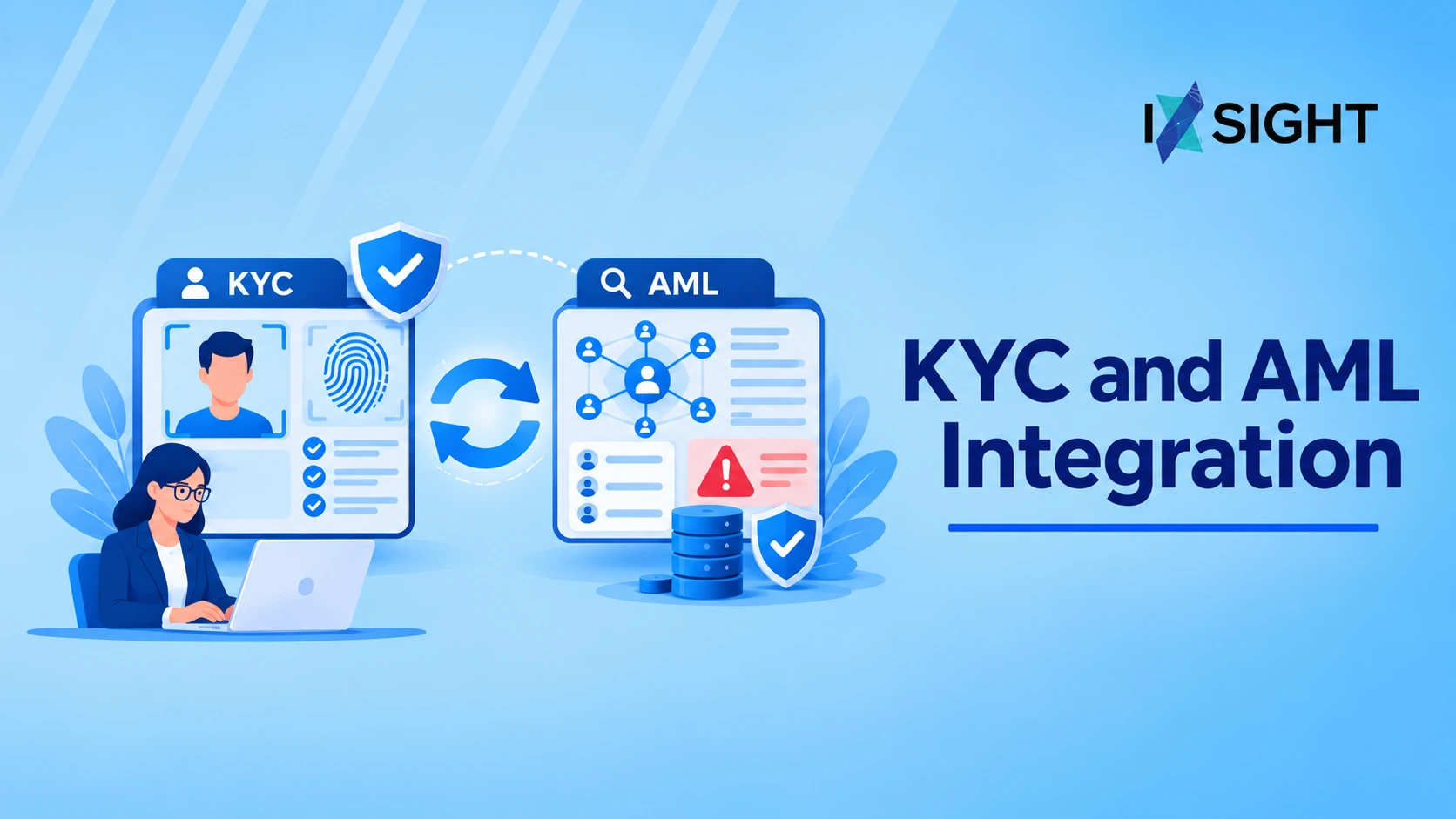
The two pieces of the puzzle are the same: KYC and AML monitoring, and they fit together best when they're paired.
KYC (Know Your Customer) is where you take and verify customer identity documents, validate customer addresses, determine the customer's business, and make an initial risk determination. Monitoring then checks to see if that's what the customer really does.
When they're split systems, issues start to surface sooner. For instance, let's say a customer says he makes a certain amount when he joins, but that he is getting a lot of transfers every week after that. The mismatch will only be apparent when it is detected by monitoring, which requires it to be able to see the declared income. Suppose the customer had a customer ID that had come to an end or whose risk rating should have been adjusted following a bad news story. Suppose a customer had an issuing document for their customer ID that has expired, or whose risk rating should have been updated after a bad news story. The monitoring engine continues to use information that is outdated if there is no link back to KYC.
Integration can be done forward and backward:
If both are part of a connected workflow, then the analysts will have one single view of the customer. They need not log in to three systems to determine who, what, and what they actually have done.
The Central KYC Records Registry (CKYCRR) in India further supports this. It is a centralized system for storing customer KYC data, which is run by CERSAI (Central Registry of Securitization Asset Reconstruction and Security Interest of India). Each regulated entity has its customers upload KYC data, and each customer gets a unique 14-digit KYC Identifier (also sometimes referred to as “KIN”). These records can then be used by other regulated entities to access the data to avoid the duplication of the same type of documents.
It is important that one is specific in terms of its role. CKYCRR does not contain any transaction monitoring tools. Does not observe your customers' payments. What it does is reinforce the link to monitoring that is required. Here is how:
Uniform and consistent identity information. Records are recorded following a standard format. Standardized data minimizes errors and duplicate profiles, where your monitoring system matches customers, links related parties, or screens names.
Streamlined and quicker onboarding. With the KIN, you can retrieve a record that exists in your system, which cuts down on onboarding and subsequent document collection. Your team can start risk profiling earlier, and customers will be grateful that they don't have to send any of these documents over again.
Platforms that integrate directly with CKYCRR, in addition to your core systems, enable a compliance team to transition from identity verification to risk rating to monitoring all the way through in one flow, with fewer manual handoffs.
If you are considering tools, you will know more after asking some questions than reading any brochure:
Request a sample set of data and a pilot. It is much more revealing to see the behavior of a system with your dirty reality.
Also Read: What are the Stages of Money Laundering?
The principle of AML monitoring software is to transform a lot of transactions into a short list of items that are of human interest. It collects data, assesses customers' risk, compares activity with rules and behavior models, issues alerts, assists investigations, prepares regulatory reports, and learns from the outcome for the next cycle.
The value it provides is enhanced when it is integrated tightly with KYC since the monitoring is only useful if it has some idea of who the customer is and what they said they were going to do. In India, CKYCRR helps build on this base by ensuring standardized identity records that are centrally accessible and facilitate faster onboarding and quality data.
None of this is to imply that a lack of skilled people and sound policy is not needed. For any business that deals with large numbers of transactions that involve funds, having a well-managed AML monitoring programme is no longer an option. It helps to safeguard the institution, aids in the global war against financial crime and, if carried out correctly, has a calming and focused effect on the team conducting the compliance exercise.
Our team is ready to help you 24×7. Get in touch with us now!