Ixsight is looking for passionate individuals to join our team. Learn more



Ixsight is looking for passionate individuals to join our team. Learn more
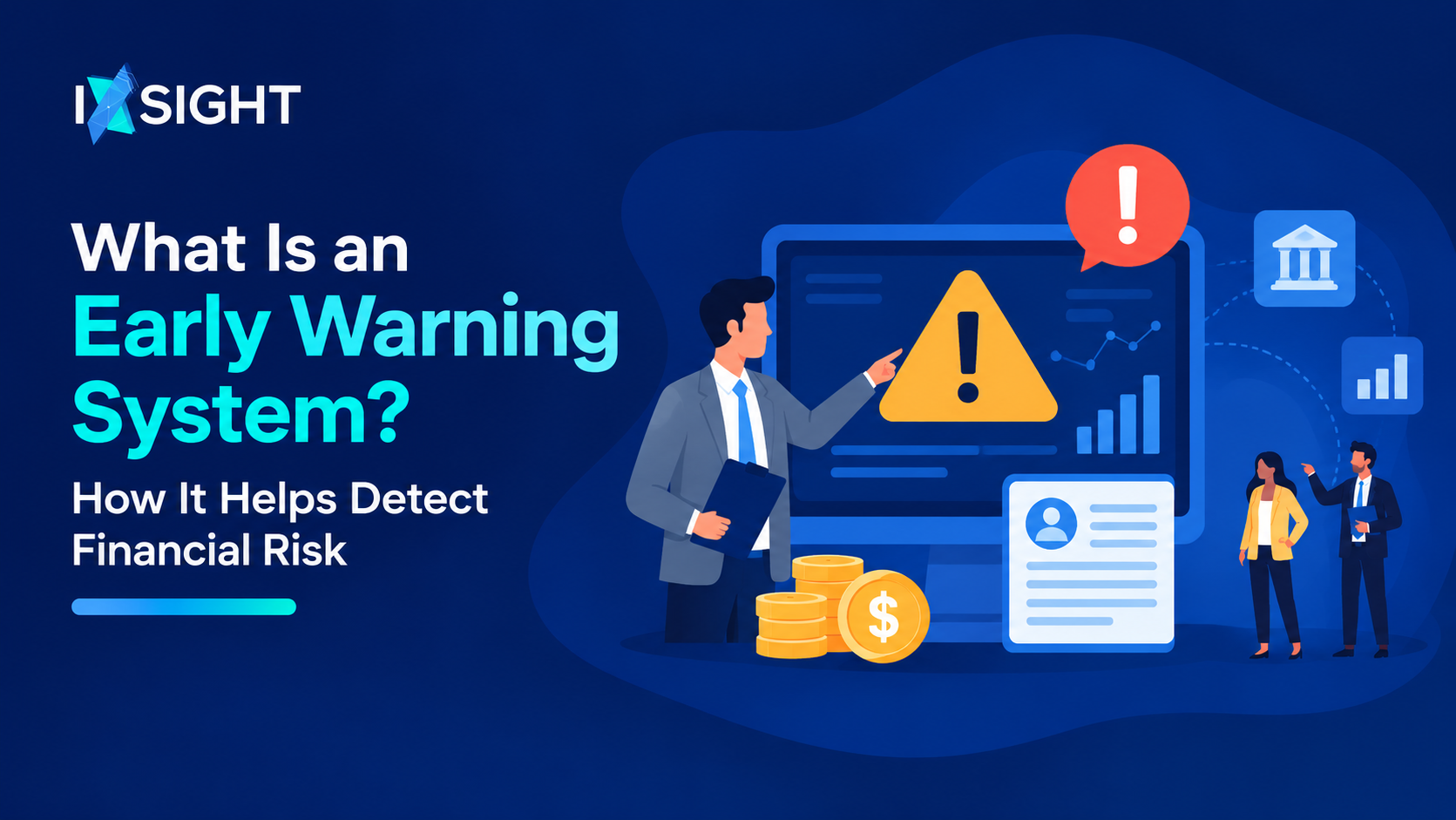
Financial crime typically doesn't make a lot of noise. It is wrapped in normal-looking transactions, in front of shell companies, set-up deposits, and seemingly normal accounts. When a suspicious pattern emerges to a human analyst in the records, the funds may have been spent and could have been laundered through a dozen jurisdictions, making them no longer traceable. This is the need that an Early Warning System (EWS) is designed to address.
Early Warning System is not a luxury for banks and other regulated institutions or fintech companies. It is a fundamental component of AML monitoring software that acts as the backbone of a compliance programme and is able to detect red flags in real time, before it is too late to take action. In this article, we will demystify what an early warning system (EWS) is in AML, how it works on a day-to-day basis, the various types that institutions use, and the problems associated with the implementation of an EWS at scale.
An Early Warning System, in anti-money laundering, is a system of proactive monitoring that aims to detect potentially suspicious financial activities at an early stage. An EWS does not wait for a periodic audit or a tip from law enforcement, but rather it continuously monitors transactions, the behavior of accounts, and profiles of their customers, searching for anomalies that do not reflect what is “normal” for the customer or what is known about typical money laundering typologies.
While the technology isn't that complicated, the goal is simple: catch the warning sign before the illegal funds are further moved through the financial system, and provide compliance teams a sufficient amount of time to investigate, escalate, or report the activity to the regulators.
The early warning system can be considered a smoke alarm for financial crime. A smoke detector does not wait for the fire to spread throughout the building. It picks up on the first puff of smoke, the first sign of trouble, and starts to ring the warning alarm right away. The same goes for an EWS and money. It's set up to be alerted to any unusual activity, such as an unexpected increase in transactions, an unexpected transfer to a high-risk jurisdiction, or a dormant account that suddenly begins to make lots of transactions.
These systems are used by banks, credit unions, payment processors, and even insurance and securities companies, since there is no better way to find out about money laundering after the fact than to have it be a failure of the system to do so.
An EWS is not just to alert on suspicious transactions, but it's also to identify the types of transactions that may pose a risk. It has several related objectives which are fundamental to all efforts that are taken in the treatment of AML.
Early warning systems within banks are not an option. These are essentially imposed by the key AML regulatory systems that regulate financial institutions around the globe.
The FATF standards emphasise the need for a risk-based approach to monitoring and call for institutions to have systems in place that will generate meaningful alerts and controls, in accordance with the level of risk they face. The USA PATRIOT Act mandates that financial institutions not delay reporting suspicious transactions and have systems in place to detect and report them. The European Union has passed several Anti-Money Laundering (AML) Directives that impose a responsibility on EU member states to ensure banks and other obligated entities have early detection capabilities with the use of transaction monitoring tools.
These international frameworks, in addition to those local regulators and central banks impose, often include local expectations such as the requirement to connect an EWS with Know Your Customer (KYC) processes, Customer Due Diligence (CDD), and sanctions screening. Early Warning in action means that EWS are seldom used in isolation. It typically is one element of a larger compliance world, alerting to case management systems and capturing customer risk information from onboarding systems.
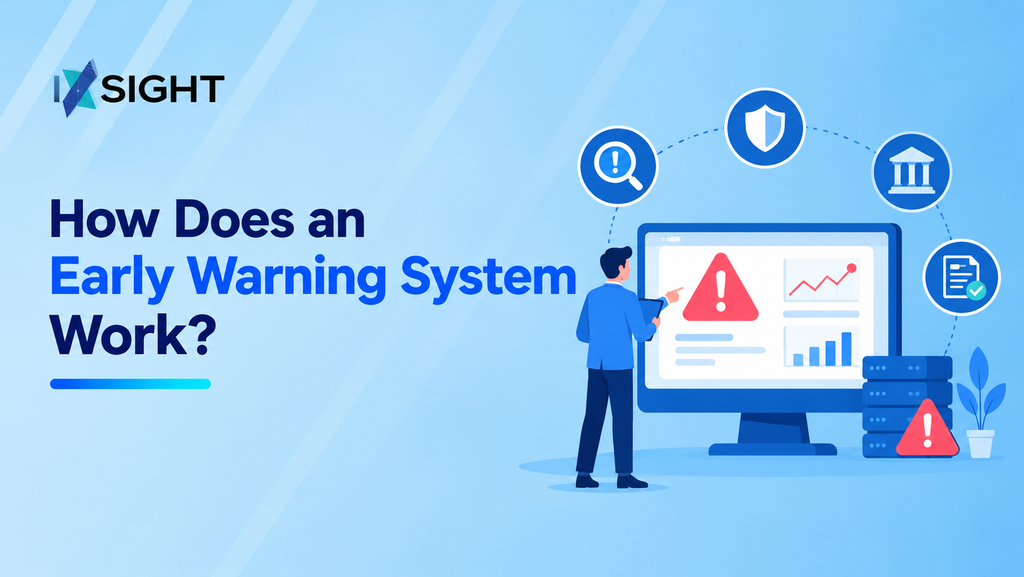
In principle, an EWS operates by comparing the actual conditions today to a "normal" baseline, and alerts the user to the difference as soon as it exceeds a "threshold" that is large enough to require a human review. Below this simple concept is a series of layers.
Some patterns reappear as triggers in the AML monitoring software:
No single one of these “triggers” is definitive proof of wrongdoing. A big deposit may be an inheritance and increased activity may indicate a legitimate business event. It's precisely for this reason that human review will also be required with the most sophisticated systems.
Different institutions have different types of EWS and will typically select the appropriate one based on the institution size, appetite for risk, and the customer base complexity. In general, there are a number of types of early warning systems.
Integrated compliance suites take it one step further, integrating early warning detection, KYC and sanctions screening, and case management all into one platform. This end-to-end approach minimizes the hassle of getting data to move between different systems, and provides compliance teams with a broader context when analyzing an alert.
An early warning system should not be divorced from the customer experience, so it is important to keep that in mind. A customer may see a delay in a transaction, an account freeze, or a customer may demand more documents for additional due diligence when an alert fires.
This is usually a non-issue and will be quickly addressed when the customer supplies the requested information. Lots of false positives do come with a price tag, though. If a transaction by a legitimate customer is marked unnecessary, the customer may get upset, and a series of such incidents can ruin the trust between the bank and its clients. One of the fundamental conflicts that institutions face is being able to catch real risk and not suspect customers.
Even as institutions conduct this monitoring, customers have rights concerning their privacy and data protection under privacy and data protection laws. One of the continuous hurdles in designing and regulating the surveillance systems is balancing surveillance needs with customer privacy.
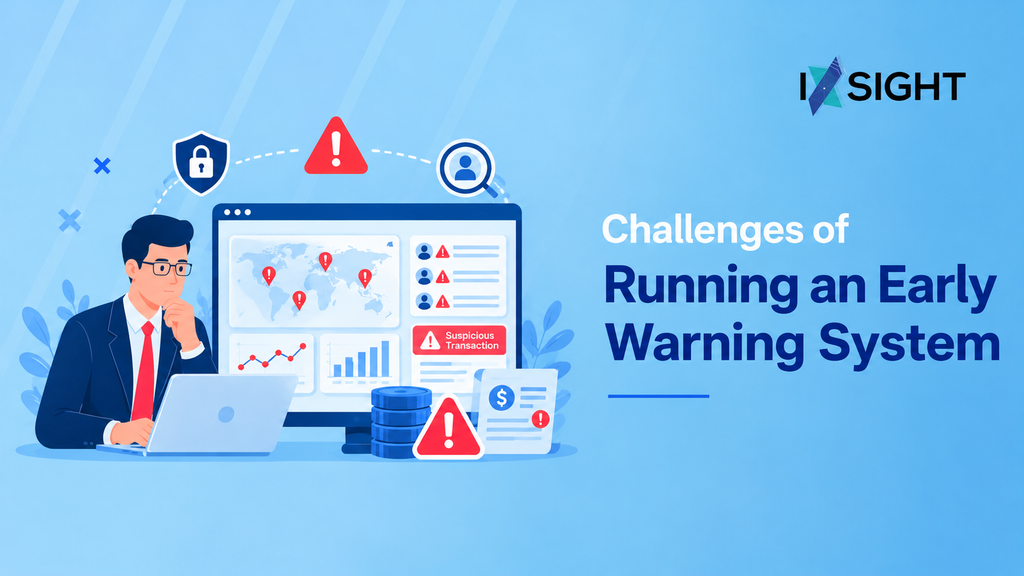
No early warning system is without its imperfections, and there are also a whole host of issues that institutions have to contend with when operating a warning system.
Those institutions that have good management of these problems have some habits. They are spending money on artificial intelligence and machine learning to enhance pattern recognition, and the number of false-positive results will dwindle over time. They do not leave risk profiles and rule sets in place for several years; they continually review and revise as needed. They take a risk-based approach and a customer-centric approach; they look most closely at where there is the greatest risk, not everywhere. They also do their own audits to ensure that the system is functioning as it should, and they have open lines of communication with regulators and other peers in the industry to keep up to date with new typologies.
AML monitoring software continues to be a rapidly evolving tech. AI and machine learning are even becoming part of the detection engine, contributing to a more predictive detection capability and reducing long-term compliance teams' false positive woes. Nowadays, cloud-based RegTech platforms are bringing advanced, scalable monitoring tools to smaller institutions that previously could only be used by the largest banks around the world. For regulators, they are putting greater detail and prescription on the criteria for the construction and validation of monitoring systems. Aside from that, the adoption of big data analytics has been increasing, providing institutions with more insights on customers' behaviour, and cross-border data-sharing projects have been helping to bridge the gap between different countries in relation to financial crime.
Also Read: What Is CKYCRR? Meaning, Functions, Benefits, and Importance [2026 Guide]
The core of an early warning system is a commitment to recognize and address issues at a young age. For banks and other financial institutions, it means a combination of real-time transaction monitoring, behavioral analytics, and precisely tuned risk signals that identify potential issues early – before they become a complete compliance disaster or a crime enabler.
Effective EWS establishment and management is not an easy task. It demands careful consideration of the rules, continuous tuning, consideration of customer experience, and constant alertness to new criminal techniques. Otherwise, it's much more expensive in all aspects to find out about money laundering after the regulators or law enforcement show up. For all institutions with a serious interest in AML compliance, it's not good practice to have a well-designed Early Warning System. It's the basis of all the other concepts.
Ixsight provides Deduplication Software that ensures accurate data management. Alongside, Sanctions Screening Software and Data Cleaning Software are critical for compliance and risk management, while KYC Risk Scoring enhances data quality. Additionally, CKYCRR 2.0 Upload Software supports streamlined regulatory reporting and seamless compliance processes, making Ixsight a key player in the financial compliance industry.
Our team is ready to help you 24×7. Get in touch with us now!