Ixsight is looking for passionate individuals to join our team. Learn more



Ixsight is looking for passionate individuals to join our team. Learn more
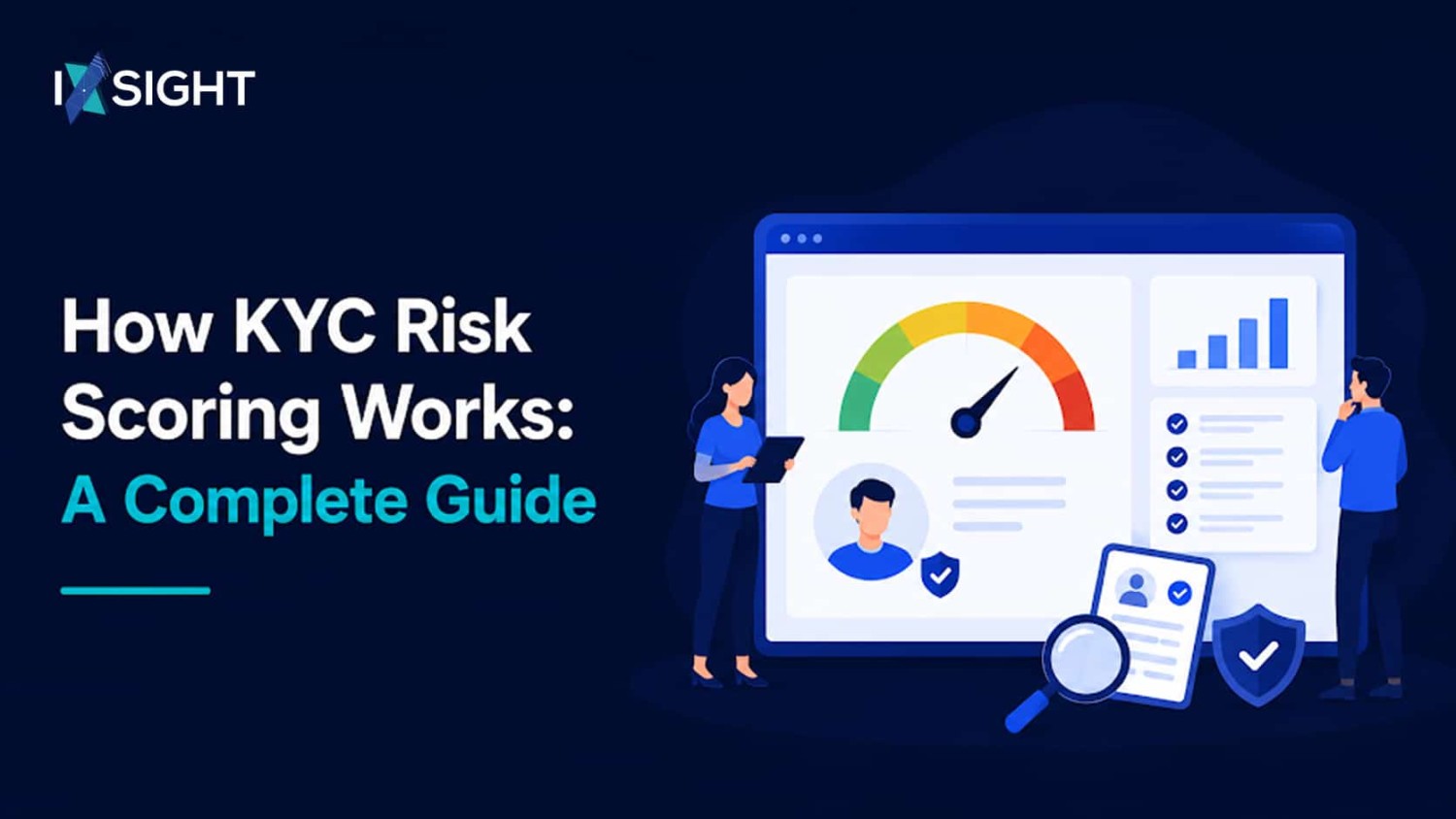
Indian institutions are no longer facing the threat of financial crime; it has become a part of their daily business operations. The rise in domestic payment frauds has been spiking over 70% in a 6-month span, and UPI fraud alone has crossed the ₹1,087 crore mark for FY 2023-24, which has increased the pressure on banks, NBFCs, fintech, and payment processors to strengthen compliance frameworks. One key aspect of any successful compliance program is its ability to perform KYC risk scoring.
This guide explains what risk scoring is, why Indian financial institutions can't do it without it, how to create a risk scoring model step-by-step, and which common bad business practices sneakily creep around even the best efforts of financial institutions to comply. From assessing AML software India to creating an in-house risk framework, it's here that things begin.
Risk scoring assigns a score to a customer and/or transaction to reflect how threatening that customer is to a financial institution. Risk scoring presents a spectrum and not a binary "safe" or "suspicious" verdict, allowing your compliance team to prioritize resources, investigations, and react to a real threat proportionately.
There are two basic types of data that are utilized in the calculation. Quantitative data includes numerical information, such as transaction volume, frequency, account ages, and monetary amounts. This is qualitative data, and it introduces judgment about how suspicious this occupation is when income is stated. Does this geographic profile make sense? All of this goes into models that give scores to which the regulator and compliance staff turn.
Risk scoring isn't just a one-time event at the customer onboarding stage. It is a continuous process, and as customers' behavior changes, so does the level of risk. Even if a customer looks like a low-risk customer on day one, that behavior can change within months, and the customer will suddenly become high-risk.
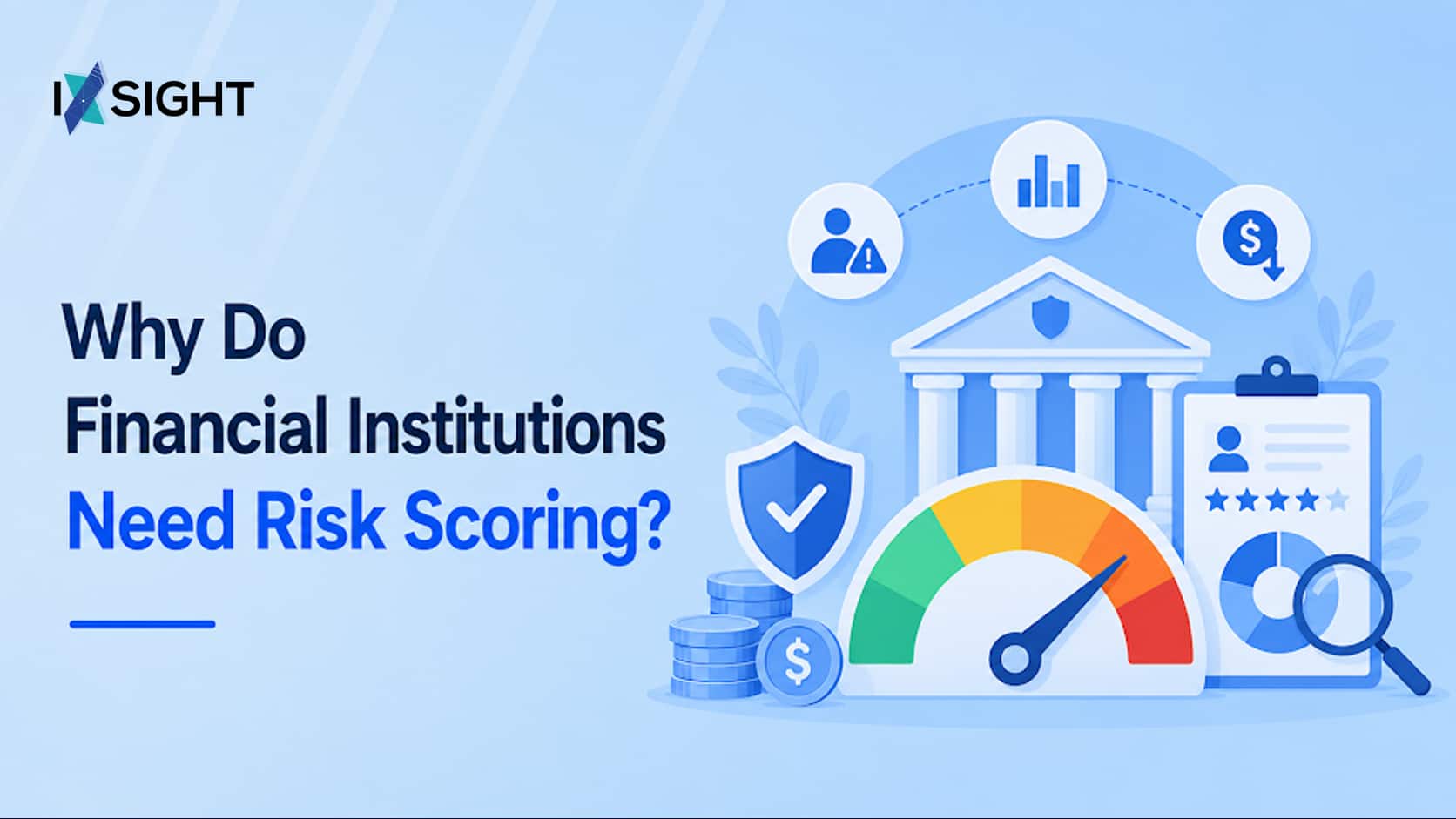
The answer to this question needs to be considered from both regulatory and practical perspectives on financial crime.
The regulatory environment in India has been getting increasingly stringent. Low, medium, and high risk are now being adopted by all regulated entities under the new KYC Master Directions issued by the RBI in June 2025. The RBI had undertaken an AML risk assessment for NBFCs in a specific manner, and a lack of transaction monitoring and inconsistent categorization of risks were identified as the most common compliance issues. Penalties are no longer a matter of theory: the RBI slapped a ₹5 crore penalty on a major bank for failing to meet KYC/AML requirements in its recent enforcement actions.
There has also been a change of regulatory philosophy. AML policies need to be more than just documented. The RBI Annual Report 2025-26 emphasized that financial institutions need to have effective controls and not just have a policy that is backed by evidence-based risk management.
There are three organizations that regulate compliance with AML in India, which include the Enforcement Directorate (ED), Financial Intelligence Unit-India (FIU-IND), and the Reserve Bank of India (RBI). The Prevention of Money Laundering Act (PMLA) 2002 lays down the basic legislation, and the obligations are cast upon institutions to submit Suspicious Transaction Reports (STRs) to FIU-IND, usually within 7 working days of the suspicion.
Risk scoring is more than just a compliance issue; it is a real operational challenge. If there is no such thing, compliance teams will not be able to strategically utilize investigation resources. They either investigate everything (which is not feasible at scale) or investigate nothing systematically (which is dangerous). Risk scoring adds another layer as a triage system: Low-risk customers move through without additional hassles, medium-risk customers are monitored as usual, and high-risk customers are subject to enhanced due diligence.
This is extremely relevant to digital-first institutions such as neobanks, payment processors, and UPI platforms. Today, India has almost 46% of the global share of digital transactions. This level of volume is too high to reasonably undertake manual compliance review. Finding the right AML software in India, equipped with robust risk-scoring models, will help meet regulatory expectations while remaining aligned with operational realities.
A risk scoring model is a system that uses specific criteria and algorithms to determine the risk score for each customer in a customer base. There are some general attributes of good models:
Some models are based on rules and automatically award or deduct points, while others are more complex and use machine-learning algorithms to recognize intricate behaviors from hundreds of variables. If you are a financial institution in India that is just beginning its compliance journey, a rule-based model and setting it up based on the RBI's three-tier framework is the right way to go. As datasets increase in size, more mature institutions incorporate statistical or machine-learning methods.
In the modeling process, the key feature of any model is that it is dynamic. A model that issues a score as part of the onboarding process and does not make updates is not a risk scoring model; it's a one-time checklist with a number added. Customers' behavior changes and scores should change as well.
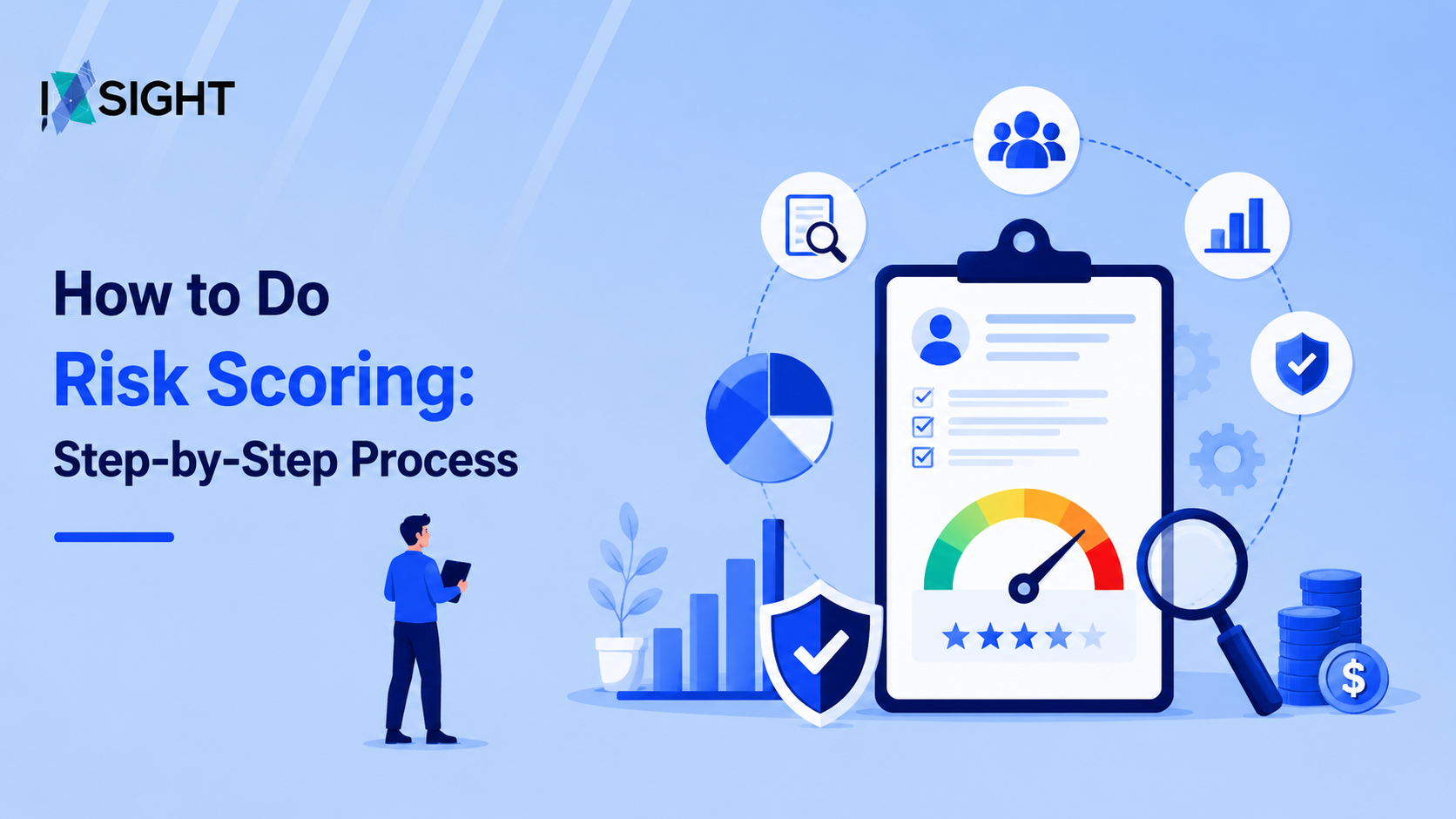
To calculate any score, institutions must confirm the customer's legal status and the legality of their transactions. This involves checking against sanctions lists (OFAC, UN, EU, and India-specific), PEP lists, adverse media, law enforcement lists, and internal watchlists.
This screening must be a critical process and should not be used as an initial onboarding screening. Once a customer has passed an initial screening, he or she can be on a sanctions list six months later. The only defensible way is to use automated, continuous screening, which is run at least every day. Any customer who has been identified as being on a sanctions list after becoming a customer should result in immediate score escalation and investigation.
Practical takeaway: In practice, automated screening systems overcome the human fallibility that is bedeviled by watchlist management. For Indian institutions dealing with thousands of customers, it's not something that can be compromised on infrastructure.
Risk is strongly predicted by demographics, not because any demographic group is necessarily at greater risk of financial crime, but because certain characteristics are correlated with increased exposure to financial crime.
The factors to consider are nationality and country of residence (using the FATF list of high-risk and non-cooperative jurisdictions as a major reference); occupation (cash-intensive businesses, PEP-adjacent occupations); date of birth; length of time the customer has been with the institution; residential and mailing addresses; and credit and financial history.
All factors are assigned a risk weight, derived from empirical associations with real financial crime. A high-risk FATF-listed country customer with full documentation and a verifiable business purpose has a quite different risk profile from a customer of the same high-risk jurisdiction who provides little information and has an implausible occupation.
Practical takeaway: Don't assume that all risky demographic characteristics are the same. Context matters. More than simply marking off broad categories, risk scoring should portray nuance.
This step will check whether a customer's activity matches the profile they've provided. If one of the customers states they are a small business owner and repeatedly wires out large amounts of money internationally at odd times of day, that's a pattern one should look at, but not necessarily because each transaction is an anomaly.
These factors to analyze are: transaction frequency and sudden increased/decreased transactions, transaction amounts (especially the ones that stay below the Cash Transaction Report limit of ₹10 lakh in India), distribution across geography, counterparty analysis, cash usage patterns, and product usage based on account types.
Structuring is one of the key indicators affecting AML risk scores in India, and is intentionally used to keep the amount of deposits below the reporting limit so as not to be detected. Systems that monitor the behavior of transactions over time, when they are near the threshold, are much more effective than systems that evaluate each transaction individually.
Practical takeaway: Set up behavioral parameters in the first 90 days of the customer's relationship. When any deviation from that baseline occurs, especially a sudden increase in volume or sudden international activity, automatic score recalculation should occur.
In addition to transactions, institutions should track indicators of operations that may trigger transaction-level red flags: unusual transactions, failed authentication attempts, rapid changes in account information (such as addresses or phone numbers), customer service complaints, suspicious alerts, and SAR and STR history.
The best way to use behavioral analytics is to consider them as a set of multiple weak signals. Each of these red flags is individually insignificant, but when combined with the slightly higher number of transactions, a recent address change, and a failed login attempt, it could indicate coordinated account takeover or mule account activity.
Practical takeaway: Set up behavioral scoring to combine low-level signals. More often than not, a combination of weak individual indicators may be more relevant than any single failure.
The last step is not a step; it's an operating posture. Risk scores should be continuously updated with new information. This involves three parallel mechanisms all in action:
Real-time transaction scoring involves assessing the risk and behavioral profile of the customer at the time of payment, before it is allowed. Event-triggered rescoring rescores the document if there have been significant changes, such as a large deposit, address change, sanctions list entry, or adverse media. Comprehensive reviews, as scheduled, will not allow any customer to fall between the cracks between trigger events, while high-risk customers should be reviewed on a monthly or quarterly basis, medium-risk customers should be reviewed once every six months, and low-risk customers should be reviewed at least once per year.
Even the best risk-scoring systems can go wrong if there are problems with implementation. These are the most common and expensive compliance issues that Indian compliance teams face:
The possibility of risk scoring also has India-specific nuances not covered by global frameworks. The Department of Telecommunications' Financial Fraud Risk Indicator (FRI) categorizes the mobile numbers into Medium, High & Very High risk, which will allow the platforms to flag the suspicious UPI transactions before completion. The integration with India Stack (Aadhaar-PAN linking for identity deduplication and the Account Aggregator for consent-based financial data) provides risk-scoring systems with identity-verification infrastructure not available in most other markets.
India's three-tiered KYC system is directly aligned with its risk-scoring tiers. Simplified Due Diligence (SDD) is implemented for those on the small-balance list, government employees, and verified low-risk customers. Basic KYC is for "the regular populace. Enhanced Due Diligence (EDD) is used for PEPs, businesses with high cash needs, and businesses that serve customers on the other side of the globe, and asks for source-of-funds documentation, approval from senior management, and higher frequency of monitoring.
The ideal AML software in India can be tailored to meet these specific regulatory requirements. It directly correlates scoring outputs with RBI's 3-tier classification, creates STR documentation in compliance with the FIU-IND requirement, and provides audit trails that meet standards for regulatory examinations.
However, effective is more than just detecting rates. A risk scoring system is a tool that can be considered a vital component in a compliance program when it can perform on multiple fronts:
Just technology is not enough. Systems need to be underpinned by effective written policies, trained compliance officers, governance oversight, and ongoing model validation. This was clear from the RBI Annual Report 2025-26: "From asking whether there is an AML system, the focus shifted to whether evidence-based measurable outcomes of the risk could be demonstrated from the system.
Also Read: 10 Features Every Efficient AML Software Must Have
KYC risk scoring is no longer seen as a compliance best practice but as a requirement for all financial institutions in India. India's rapid shift toward digital transactions, coupled with the rapidly evolving regulatory landscape and actual financial risks from being found non-compliant, puts institutions that take a 'tick in the box' approach to risk scoring at risk.
The basic principles are simple: (1) Continuously updated scores, (2) Methodology based on quantitative and qualitative data, (3) Frequent updates to the model that reflect new fraud patterns, and (4) Documentation that can withstand regulatory review. Those institutions that are developing these skills and capabilities, with the assistance of purpose-built AML software that is tailored to the Indian regulatory environment, have a better chance of preventing financial crime, meeting regulators, and protecting both their customers and business.
Ixsight provides Deduplication Software that ensures accurate data management. Alongside, Sanctions Screening Software and Data Cleaning Software are critical for compliance and risk management, while KYC Risk Scoring enhances data quality. Additionally, CKYCRR 2.0 Upload Software supports streamlined regulatory reporting and seamless compliance processes, making Ixsight a key player in the financial compliance industry.
Our team is ready to help you 24×7. Get in touch with us now!