Ixsight is looking for passionate individuals to join our team. Learn more



Ixsight is looking for passionate individuals to join our team. Learn more
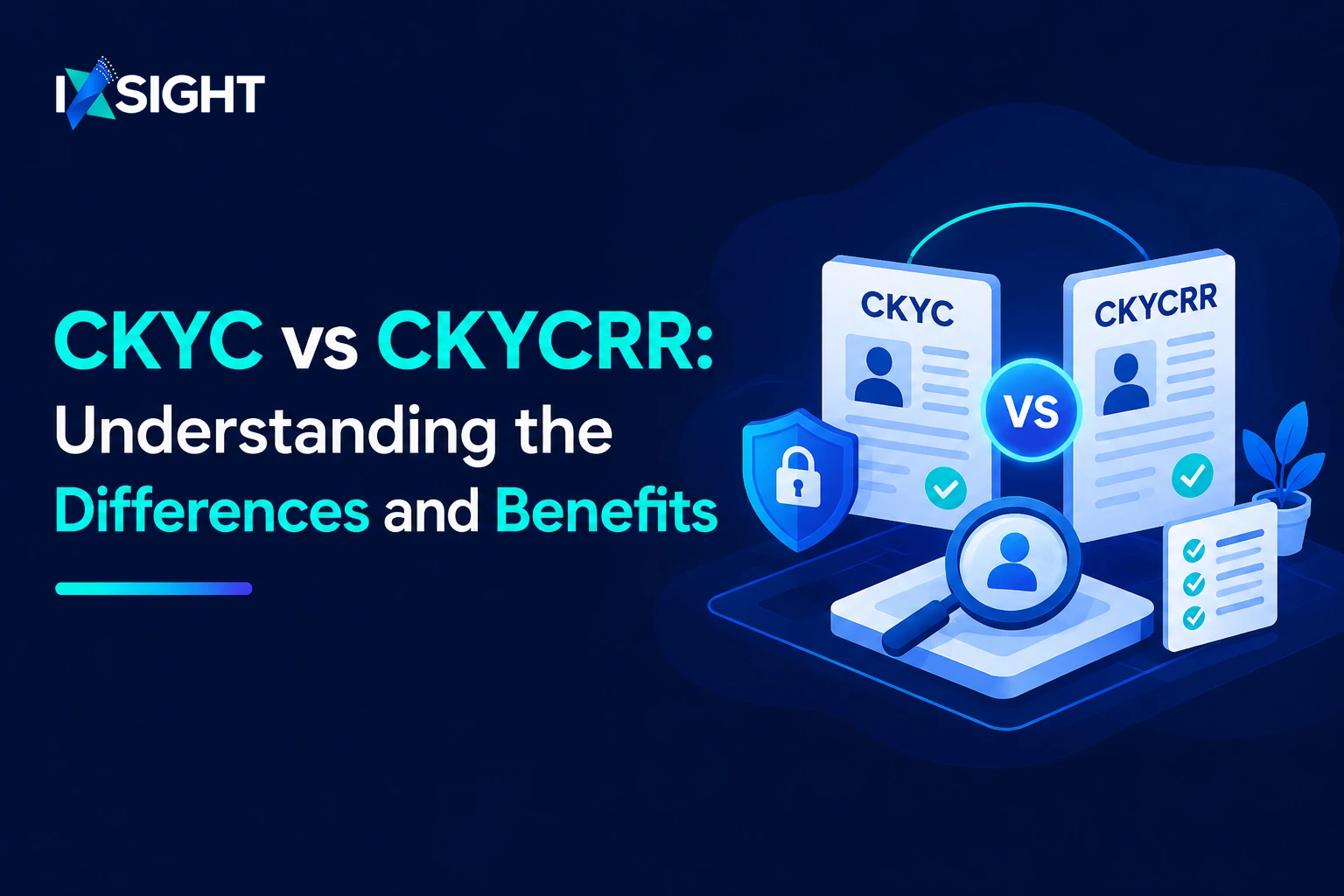
So many times, you must have been asked to submit KYC documents if you have opened a bank account, purchased any mutual fund, or taken an insurance policy in India. When you go to a different institute, you have to go through the same process again with the same PAN, Aadhaar information, address proof, etc. It is this repetition that is the challenge addressed by the Central KYC framework.
However, in the compliance world, these two terms are often used virtually synonymously: CKYC and CKYCRR. There is a common terminology challenge across banks, NBFCs, insurers, brokers, and fintechs, where one term is frequently used when referring to the other. This blog defines each term, explains their differences and relationship, and highlights why both are important for anti-money laundering (AML) compliance. It also explores the challenges institutions face and how AML software can help streamline compliance processes, improve customer due diligence, and support efficient KYC record management.
The Central Know Your Customer (CKYC) process is carried out by the Central Know Your Customer (CKYC) department. The initiative was introduced by the Government of India and enables the customer to undergo the KYC process once and get the KYC verified record used across the entire financial sector.
Prior to the coming into effect of the CKYC, each regulated institution had its own KYC records. A customer of a bank, a mutual fund house, and an insurance company would all have three different sets of files, with the same name, but with different spellings and/or versions of address. This caused duplication, increased costs to the institutions, delays to customers, and an inconsistent data picture for regulators.
In the case of CKYC, the customer's identity and address details are captured once, verified by the first institution, stored in a standard format, and centrally stored. The customer is then given a special 14-digit number, known as a KYC Identification Number (KIN). If that same Consumer contact(s) contact another Regulated Entity, that entity can obtain the verified Customer record through the KIN or the other identifiers instead of trying to create a record again.
At its core, CKYC is an idea and a process; a single customer, a single verified identity, and reusable everywhere.
To second term, now. If you're wondering what CKYCRR is, then you have come to the right place; it's the infrastructure that makes CKYC work.
The Central KYC Records Registry (CKYCRR) is a database that holds records of all the KYCs established by the state. The full form of the term “CKYCRR” in the banking industry and elsewhere is “Customized Uniform and Knowledge Coregistered Reports." It's a centralized system where the KYC information of customers is stored, maintained, and provided to regulated entities. The central registry of Securitization Asset Reconstruction and Security Interest of India (CERSAI) runs the registry in the context of the Prevention of Money Laundering (Maintenance of Records) Rules.
Thus, when a bank uploads a customer's KYC information, it is uploading it to the CKYCRR. When another institution looks for that customer and downloads the record, it is taking it from the CKYCRR. Information in the registry is assigned by the KIN.
The term "CKYC" is often confused with "CKYCRR. The two words "CKYC and "CKYCRR" are often confused.
| Aspect | CKYC | CKYCRR |
|---|---|---|
| Full form | Central Know Your Customer | Central KYC Records Registry |
| Nature | A framework or process | A centralized database or registry |
| Purpose | Enable one-time KYC and reuse across institutions | Store, manage and share standardized KYC records |
| Who uses it | Customers and regulated entities, through the KYC process | Regulated entities, through upload, search, download and update |
| Output | A verified customer identity usable across the sector | A 14-digit KIN and a standardized record |
| Operated by | Governed under the PML Rules and regulatory directions | Managed by CERSAI as the central registry |
Let's think about this. CKYC is the library system, which has rules regarding the cataloguing and loaning of books. The books are actually kept and indexed in the library building called CKYCRR. The building cannot function without the system, and the system cannot function without the building.
In the banking vernacular, the entire banking system is sometimes referred to as the "CKYC" system, which includes the registry. This is OK for informal purposes. However, being accurate does help for compliance teams creating audit paperwork, internal policies, or setting up software. Problems uploading should be considered an integration problem with CKYCRR. If you lack some steps in your customer onboarding process, it's a CKYC process problem.
It would help to understand the relationship between CKYC and CKYCRR to better understand the influence of weakness in one on the other.
The basic idea of the flow is as follows:
What's in the CKYCRR is everything to the quality of the CKYC experience. The reliability of the registry decreases if institutions upload incomplete, mismatched, or poorly formatted records, and each other institution that downloads the records is likewise plagued. Hence, the importance of the accuracy of uploads is taken very seriously.
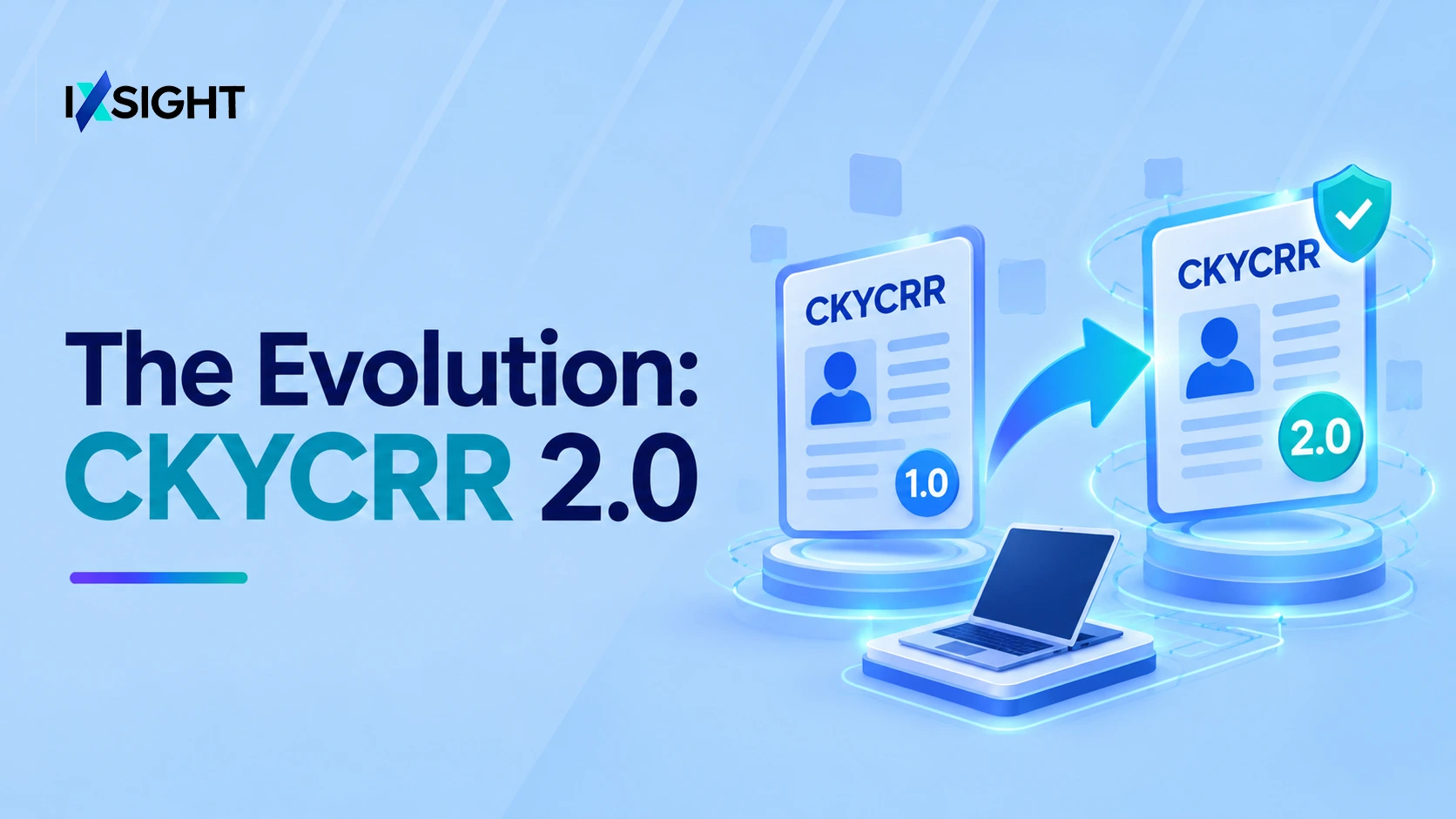
The registry hasn't been resting, either. The updated registry, which has changed the format and specifications of its data, added search and download functionality, and strengthened required fields and validations, is known as the CKYCRR 2.0. The aim is to improve data quality, increase the matching of records, and ease the handling of updates and legal entity records.
This upgrade is more than just a technical detail for institutions. The migration to newer specs may require the existing upload processes to be reworked, and field mappings and file formats to be reworked as well. Previously accepted records may now be rejected as they are re-validated. Semi-automated and manual processes constructed around the old structure are often found to be flexible and difficult to deal with the new requirements.
One of the reasons for the rise in the market for CKYCRR 2.0 uploading software is because of this. Institutions are looking for tools that will output the records in the proper format, validate the records prior to submission, allow for bulk uploads, process rejection and error reports, and maintain an audit trail of all uploads.
KYC is not a stand-alone process. It's the basis for AML compliance. Without knowing who your customer is, you have no means to assess their risk; you can't monitor their transactions, and you can't identify suspicious behavior. There are multiple layers to understanding the role of CKYCRR in compliance with AML.
This is where AML software comes to the rescue. Modern AML software will usually include the functionality of screening customers for sanctions and watch lists, categorizing risk, monitoring transactions, alert management, and regulatory reporting. These tools deliver enhanced data quality that directly impacts their performance, and that data quality is derived from KYC and the CKYCRR. If customer records are accurate and consistent, screening results in fewer false positives and risk models work as expected. If they are not, even the best AML engine falters, no matter what it is.
The impact of both CKYC and CKYCRR extends beyond customers, institutions, and the financial system.
Both of these are essential to achieve these benefits. There would be no place to keep a record of a process without a registry. If there were no process for creating a registry, it would be a database of records that were inconsistent.
Why are institutions still having difficulties with the framework, if it works so well? Anybody who has been part of a compliance or operations team in the field knows that, in reality, the challenges of CKYC and CKYCRR compliance are more of a practical nature than conceptual.
1. Data quality, data formats. The registry requires records to be in a standard format, have certain required fields, and meet image specifications. It is possible to have rejections for a few minor issues, like mismatched name format, missing parent or spouse information, an incorrect date format, unclear photos, or images of the document that are the wrong size. Rejections are rework and delay.
2. Queues of old data. After many years of customer information, institutions may find that they have information that is not up to current standards. Scaling up cleaning, enriching, and uploading those records is a big project, particularly if the original records are kept in various systems and physical files.
3. Timelines. The regulated entities are expected to upload KYC records to the system within the stipulated time frame, after the initiation of an account-based relationship, and ensure timely updating of the same in case any change in customer data is identified. Audit observations and regulatory risks are created if these timelines are missed. Timelines are determined by regulatory instructions which are regularly updated, so teams need to keep up to date with the latest circulars.
4. Updates/remediation handling. A Customer updates a Customer's address at a Customer's bank. A Customer updates the address of a Customer in his bank. How will that come through to others? Disciplined workflows are needed to manage requests for updates, resolve discrepancies between the registry and internal records, and to handle requests from other entities.
5. Switch to other specifications. One of the things that needs to be revisited is field mappings, validations, and file structures, as discussed, to move to CKYCRR 2.0. Schools that relied on manual preparation or older tools must get used to these new tools.
6. Connectivity with key systems. Typical applications that hold customer data include a core banking system, a loan origination system, and onboarding apps and document management tools. To have the correct, well-formatted, error-free CKYC record pulled into a single record, integration is crucial.
Consent, privacy, and security. Responsibilities include consent, secure transmission, storage, and access control of personal identity data. As expectations for data protection continue to increase, it's important that processes are in place to uphold these expectations throughout the process.
8. Lack of insights and audits. A lack of dashboards that show what has been uploaded, rejected, pending, and why will make it difficult for compliance officers to confidently reply to regulators' questions. As soon as you need to monitor a spreadsheet, it fails.
With all these difficulties, many institutions are seeking specialized tools to address the issues instead of continuing to put in manual effort. When it comes to CKYCRR 2.0 uploading software, there are some features you should consider checking out:
The latter is an important consideration to make. Different teams may operate the KYC and AML systems. They deliver more reliable and accurate screening when they share clean, consistent data, and the risk rating is more defensible, and investigations are quicker.
Process discipline is important as well as technology, but the latter is important. There are several practices that regularly have an impact:
Also Read: How KYC Risk Scoring Works: A Complete Guide
These two (CKYC and CKYCRR) are two sides of the same coin. CKYC provides a common framework and language for financial institutions to know their customers, and the CKYCRR provides a home for the framework. Knowing the difference can help ensure compliance teams are on the same page, can develop effective processes, and feel confident about audits.
The true impact, however, is when it comes to daily business. Customers have a better experience with onboarding. Institutions do not spend duplicated effort. Regulators get a better picture. And AML programmes operate on improved data and are therefore more successful in doing what they were created to do: detect and prevent financial crime.
There are some tensions on the road. The reality of data quality, legacy backlogs, specification changes due to CKYCRR 2.0, and integration issues exists. However, those institutions that put the effort into clean data capture and ensure they have the correct mix of CKYCRR 2.0 uploading software and AML software in place are more likely to find that compliance becomes a manageable task as opposed to a wrestling match.
However, if your team is still considering the treatment of CKYC as a box to tick, perhaps it's time to think differently. Not only is it a regulatory requirement. If done properly, it's the base on which trust, speed, and security in customer relations are established.
The regulatory requirements, timelines, and technical specifications of CKYC and CKYCRR are changed periodically. Make sure that all the RBI, SEBI, IRDAI, and CERSAI circulars are followed to the latest before making the changes.
Ixsight provides Deduplication Software that ensures accurate data management. Alongside, Sanctions Screening Software and Data Cleaning Software are critical for compliance and risk management, while KYC Risk Scoring enhances data quality. Additionally, CKYCRR 2.0 Upload Software supports streamlined regulatory reporting and seamless compliance processes, making Ixsight a key player in the financial compliance industry.
Our team is ready to help you 24×7. Get in touch with us now!